Eco

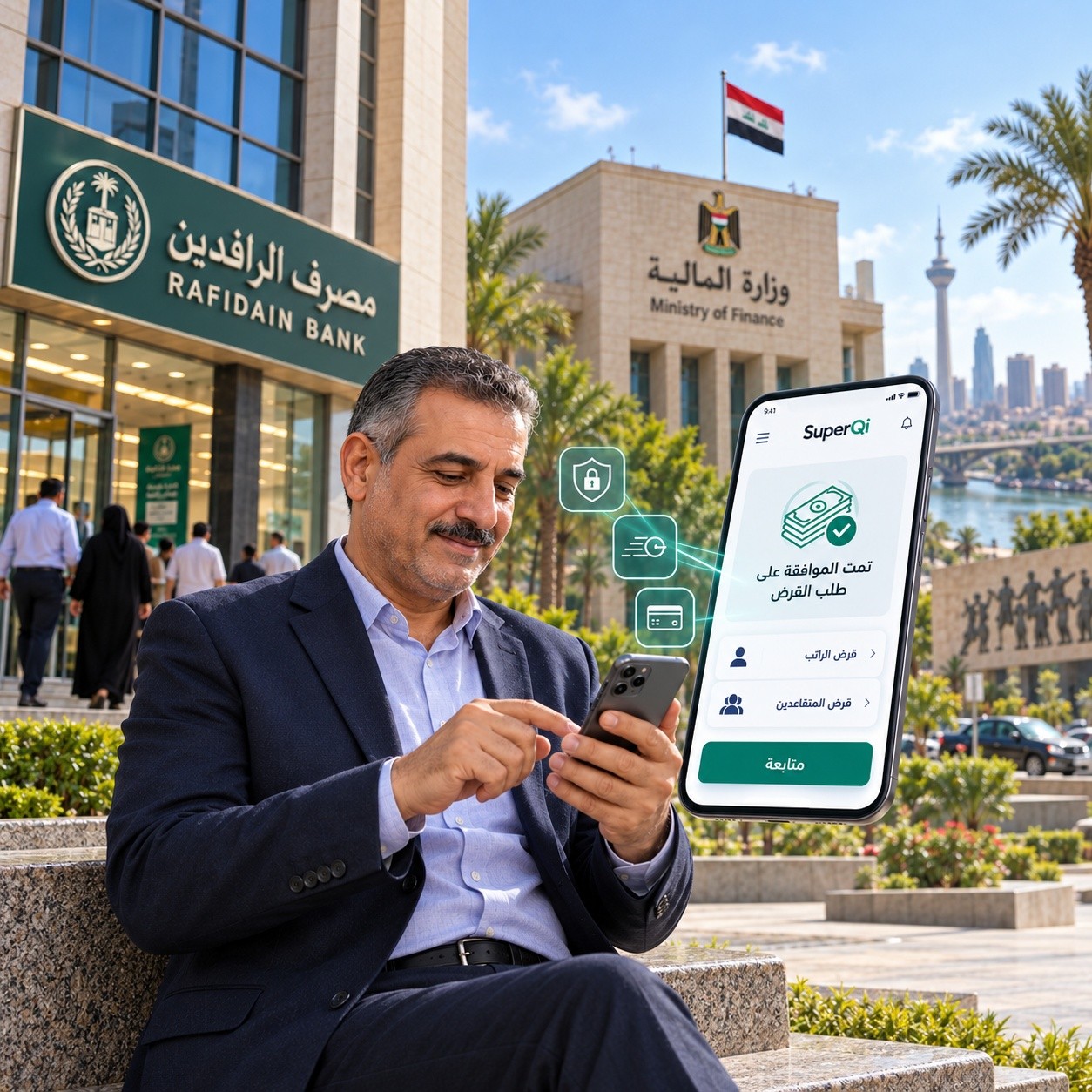
The recent initiative by Rafidain Bank in Iraq demonstrates how financial technology can fundamentally transform banking services, particularly in providing loans to employees and retirees. The launch of the loan service through the "SuperQi" app allows for 5,000 applications daily, significantly reducing time and effort while minimizing reliance on traditional paperwork. Banking services have long been associated with long queues and complex bureaucratic procedures, but smart applications enable full automation of processes, eliminating human interventions that may cause delays or bias. This technology relies on precise algorithms for rapid and fair credit checks and inquiries, while also limiting intermediaries who exploit system complexities. Setting a daily limit of 5,000 applications is not a restriction but a strategy for load management to ensure system stability, maintaining fast processing and daily fund transfers to beneficiaries. This step exemplifies an advanced partnership between government institutions and modern financial technologies, reinforcing the concept of "open banking" aimed at facilitating service access. The ultimate goal of this technology is to enhance financial inclusion, allowing employees and retirees across provinces to request loans from their homes, with funds directly credited to their smart cards, improving their quality of life and reducing costs and efforts linked to traditional transactions. This initiative also contributes to integrating the cash economy with the digital economy, increasing citizens' trust in electronic transactions and accelerating liquidity flow in the local market. Ultimately, this move shows that bureaucracy is not inevitable but can be overcome by adopting innovative technological solutions. Iraq today stands prominently on the regional financial innovation map, with a clear direction toward transforming all government financial services into smooth, humane, and accessible digital experiences for all.