
policy

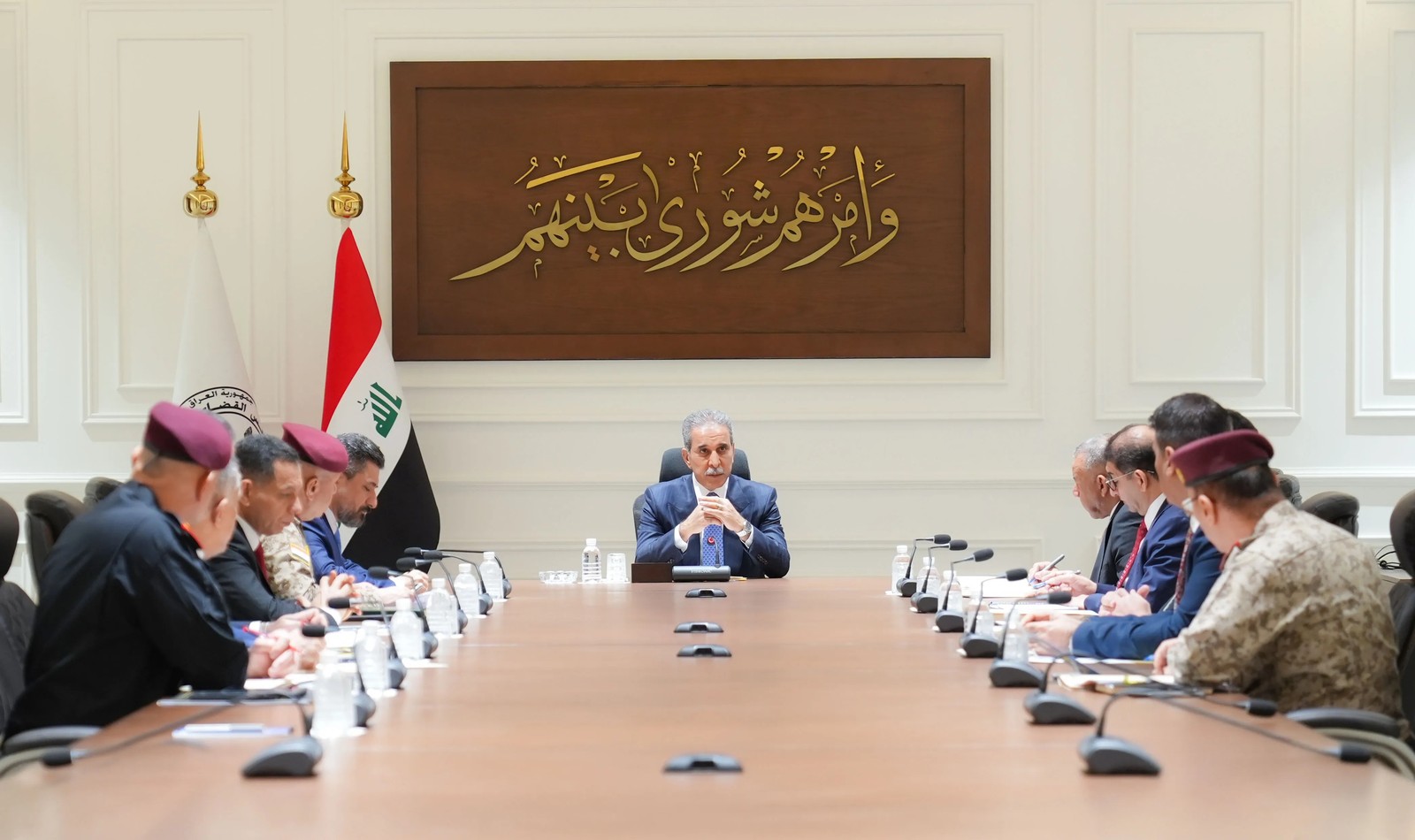
The issue of foreign detainees and convicts transferred from Syria to Iraq represents a complex legal and diplomatic challenge. In a significant move to address this matter, the Supreme Judicial Council decided today, Wednesday, to adopt a segmented approach to handling their cases. This decision follows the completion of the investigation and interrogation phase by the Karkh First Investigative Court, paving the way for the trial phase. A statement issued by the Council reported that a high-level meeting was hosted by the Supreme Judicial Council, chaired by its head, Judge Faiq Zidan. The meeting included Minister of Justice Khalid Shawani, Director of the Commander-in-Chief of Armed Forces' Office General Abdulamir al-Shammari, Head of the Iraqi National Intelligence Service Hamid al-Shatri, Head of the National Security Service Basem al-Badri, National Security Advisor Qasim al-Aboudi, Head of the Counter-Terrorism Service Lieutenant General Zaid Hawshi, and Undersecretary of Foreign Affairs for Multilateral and Legal Affairs Ambassador Shorash Khalid. Also present were the Public Prosecutor Adel Khudair, Head of the Judicial Supervision Authority Judge Laith Jabr, First Investigative Judge of Karkh First Court Judge Ali Hussein Jaffat, and the Head of the National Center for International Judicial Cooperation. This meeting, which aimed to formulate a unified Iraqi vision regarding the file of these detainees and convicts, reached a unified stance representing the Iraqi state. This stance is based on the principle of segmenting the handling of their cases, relying on existing bilateral agreements between Iraq and the countries to which these individuals belong, and in accordance with Iraqi laws and the principle of reciprocity. It was also agreed that the National Center for International Judicial Cooperation would be responsible for examining any initiative or offer presented by those countries or international organizations concerning the provision of aid and assistance to Iraq regarding this vital file.