Security

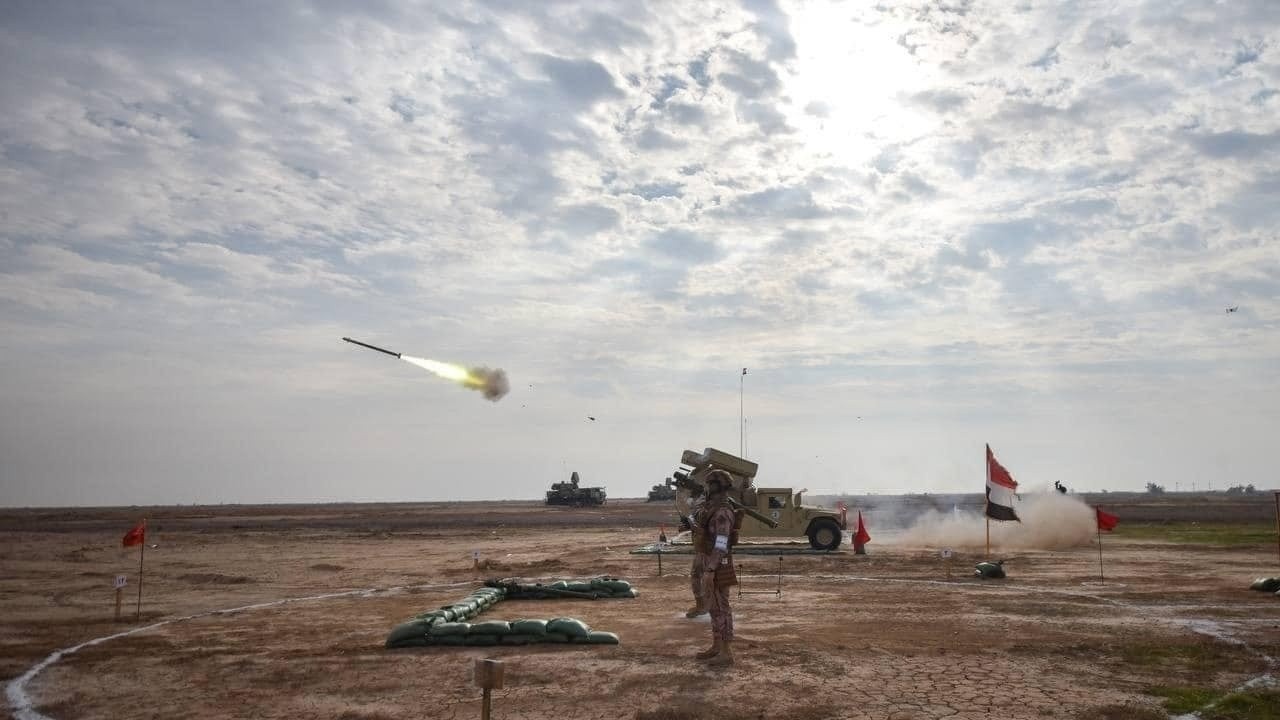
In its pursuit to fully establish national sovereignty, Iraq is taking decisive steps to accelerate the completion and modernization of its air defense system. These swift governmental efforts aim to reduce the project duration from six to three years, coinciding with ongoing preparations to conclude the international coalition's military presence. The objective is to foster self-reliance and protect Iraqi airspace from becoming an arena for regional conflicts. Sabah Al-Nu'man, spokesperson for the Commander-in-Chief of the Armed Forces, affirmed that "accelerating the completion and modernization of the Iraqi air defense system, within a specific timeframe of three years, represents a supreme strategic priority dictated by national security requirements and the demands of rapid regional developments." He emphasized that "protecting Iraq's skies and securing its airspace is no longer a deferred option, but rather the fundamental pillar for the state's capability and the imposition of its full sovereignty." Al-Nu'man explained that the transition to an integrated system equipped with the latest monitoring and early warning technologies will grant military formations superiority in tracking hostile targets and immediately responding to unconventional threats, such as unmanned aerial vehicles, thereby closing armament gaps and ensuring comprehensive coverage of all airspace. He also noted that this development fortifies strategic infrastructure and economic pillars, such as oil installations, airports, military bases, and command and control centers, to serve as a safety valve for economic stability. Al-Nu'man stressed that completing the project within three years will enhance combat readiness and bolster full sovereignty, precluding the need for external security arrangements. He added that managing national airspace with purely Iraqi hands and capabilities represents the practical embodiment of military independence and sovereign decision-making. He further stated that possessing an effective and deterrent air defense system constitutes a fortified wall preventing the use of Iraqi airspace as a corridor or arena for eliminations and military operations between regional and international parties, thus safeguarding the country from the clutches of conflicts and protecting its internal security. Al-Nu'man concluded by stating that the Iraqi armed forces, across their various branches, continue to implement armament and development plans with a comprehensive military vision and unwavering determination. For his part, Major General Yahya Rasoul, spokesperson for the Ministry of Defense, clarified that the ministry is diligently working to complete the air defense system, noting that the Commander-in-Chief of the Armed Forces, Ali Faleh Al-Zaidi, directed the acceleration of the system's development plan to three years. Rasoul explained that the armed forces possess five main command branches (land, naval, air, air defense, and army aviation), emphasizing the necessity of their integration and balanced operation. He reported that the Air Force and Army Aviation currently have good capabilities, and work is underway to complete and enhance them. Rasoul revealed that the Chief of Staff had presented a preliminary study proposing a six-year period for the system's development, based on the allocated budget. However, the Commander-in-Chief, after visiting the Air Defense Command, directed that the period be reduced from six to three years, without affecting the capabilities of building a comprehensive air defense system. He indicated that there are ongoing technical delegations and continuous meetings with reputable companies in this field, anticipating a significant transformation in the air defense sector soon. Rasoul explained that air defense consists of "integrated systems including missiles, high, medium, and short-range radars, and efforts are underway to complete them through communication with specialized companies," affirming that Iraq possesses highly efficient French radars distributed across air defense sectors, but still requires comprehensive system development. In a related context, security expert Mukhalad Hazem opined that "the available data indicates diligent and serious work towards arming the Iraqi army with the required weaponry, especially in the areas of air defense, air force, army aviation, and naval forces." Hazem noted that previous estimates had suggested Iraq would need about ten years, with an annual financial surplus of seven to ten billion dollars, to complete the readiness of its armed forces and reach a level capable of protecting the country's full military sovereignty, at least comparable to regional states. He explained that a vision has apparently crystallized among the relevant leaderships within the armed forces to establish a special fund, in cooperation with the Ministry of Finance, independent of the Ministry of Defense's budget. This fund would be dedicated to financing contracts that have been or will be concluded with entities involved in arming the Iraqi army, particularly the Air Defense Command, by equipping it with integrated systems that constitute a defensive deterrent for Iraq. Hazem considered that completing these capabilities within three years represents a record timeframe by all standards, emphasizing that achieving this requires accelerating contract finalization and seeking reputable, specialized companies in the manufacture of air defense systems, in addition to entities providing anti-aircraft systems, artillery, radars, and air support aircraft.