Eco

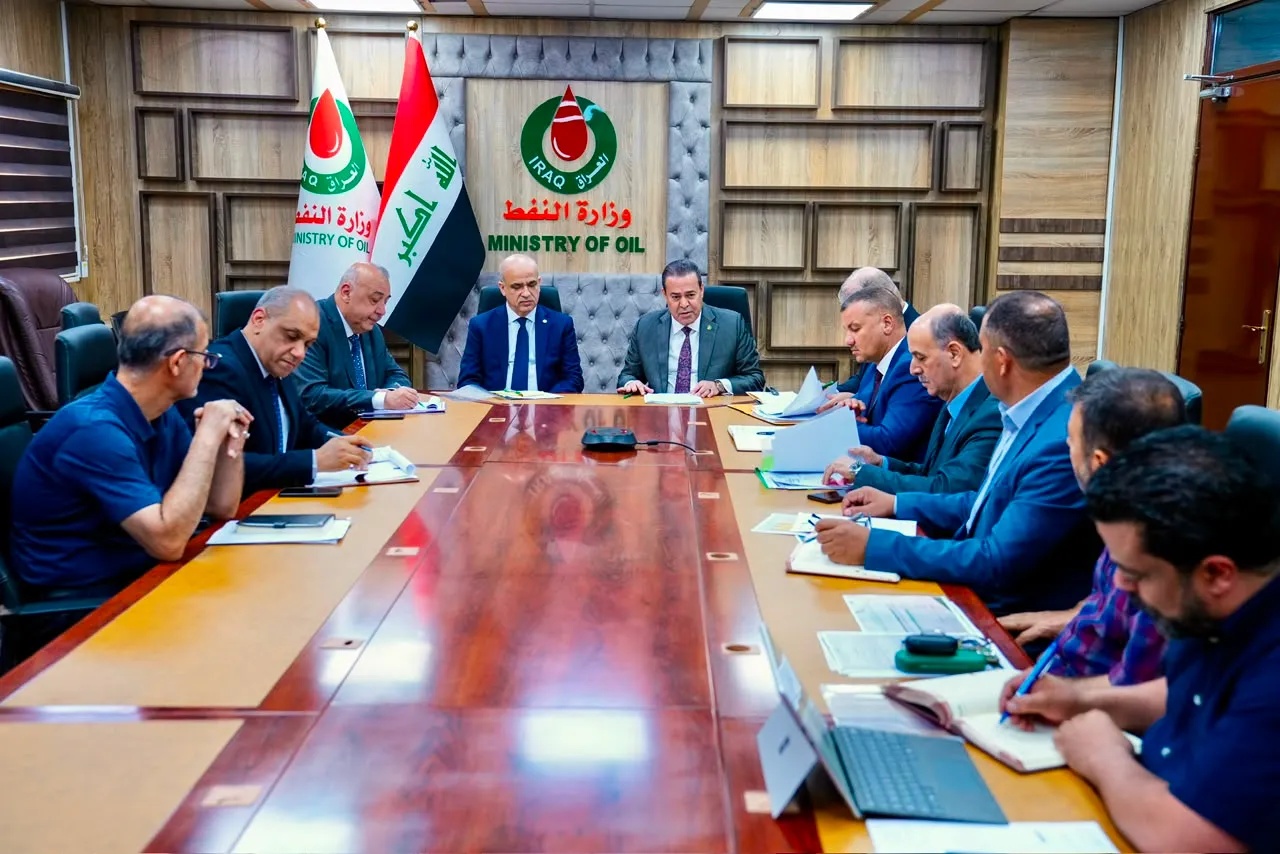
The Iraqi Ministry of Oil announced on Tuesday strategic plans to increase the production of the Ajil gas field to 300 million standard cubic feet of gas daily. These initiatives are part of the ministry's broader efforts to develop oil fields, boost crude oil output, maximize the utilization of associated gas, and supply essential energy and industrial sectors. In this context, Nasir Aziz, the Undersecretary for Extraction Affairs at the Ministry of Oil, chaired a technical meeting to discuss optimal investment strategies for gas produced from the Ajil field. The meeting saw the participation of Izat Sabir Ismail, Undersecretary for Gas Affairs; the Director-General of the North Gas Company; the Director-General of the Studies, Planning, and Follow-up Department; along with several senior officials and staff from the North Oil Company and various ministry departments. Aziz affirmed that "Ajil field's development is a pivotal component of these plans," emphasizing the necessity of integrating crude oil production enhancement programs with associated gas investment projects. He explained this integration aims to achieve maximum benefits from hydrocarbon resources and significantly reduce gas waste and flaring. He highlighted the ministry's priority on developing fields in Kirkuk, Salah al-Din, Nineveh, Diyala, and Anbar governorates, enhancing their production capabilities as part of its strategies to ensure sustainable crude oil production and optimal associated gas investment, transforming it into productive energy to support the national economy. Izat Sabir Ismail, the Undersecretary for Gas Affairs, underscored the critical importance of utilizing Ajil field's gas volumes and integrating them into the national production grid. He noted these quantities are a vital source for strengthening electricity generation stations and supporting diverse industrial sectors. Ismail projected that the field's development plans would achieve an output of approximately 300 million standard cubic feet of gas per day, representing a significant boost to the national gas system, in addition to its potential for producing liquefied gas and condensates. Attendees discussed technical options for processing and accommodating the anticipated gas volumes using existing North Gas Company facilities. Considerations included their current absorption capacity and ongoing rehabilitation and development plans under the contract with international company BP. Finally, the Undersecretary for Extraction Affairs directed relevant parties to complete a comprehensive technical study. This study is to ascertain the actual capabilities of existing facilities for gas processing and to formulate a clear vision on the need for new facilities in the Ajil field. The goal is to ensure optimal gas utilization, strengthen energy supplies, and advance the ministry's objectives of reducing gas flaring and maximizing its investment.