Security

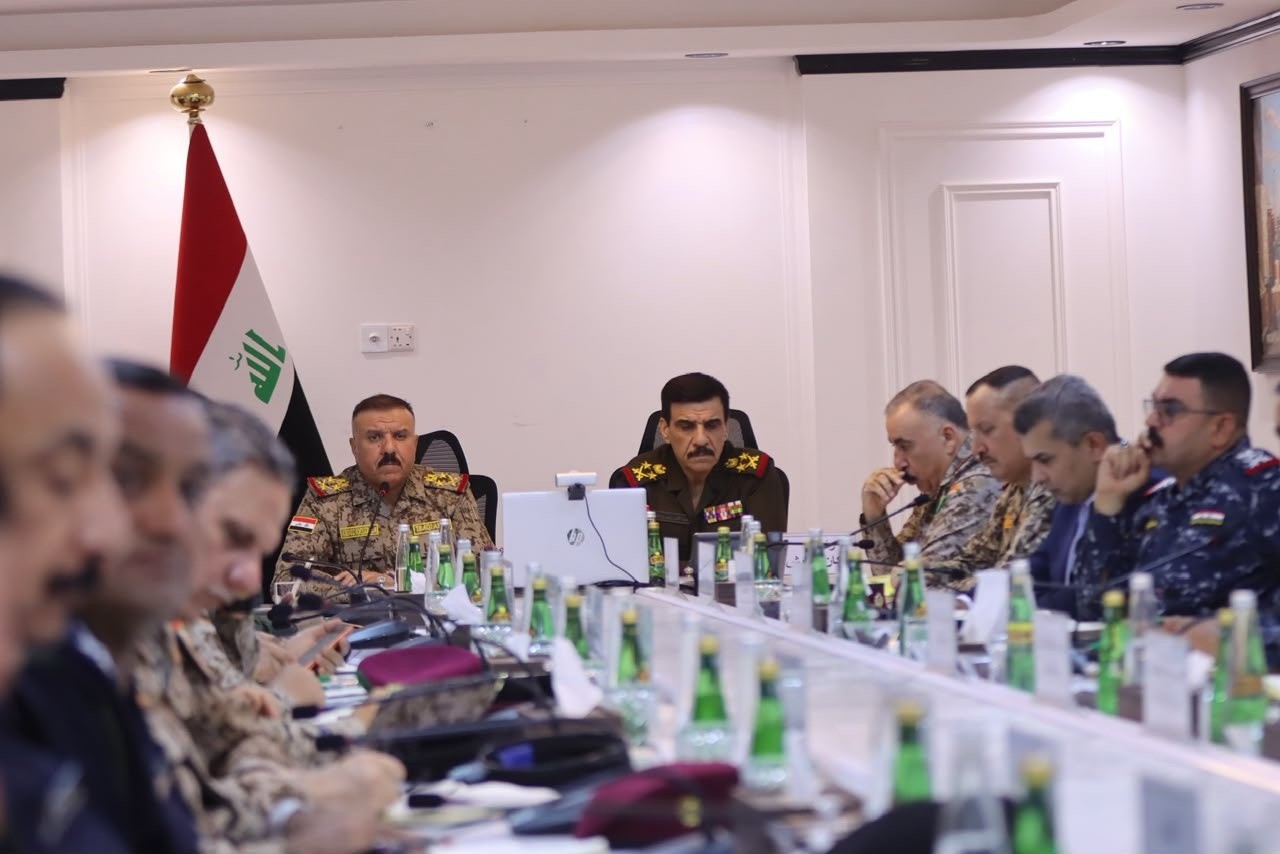
The security media clarified today, Sunday, that the oil smuggling case in the Jurf Al-Nasr area constitutes a violation of state sovereignty and an assault on public funds, emphasizing the necessity of enforcing the law on everyone without exception or favoritism. A statement issued by the Office of the Commander-in-Chief of the Armed Forces indicated that Lieutenant General Abdul Amir Al-Shammari, Director of the Commander-in-Chief's Office, chaired an extensive meeting at the office headquarters attended by senior military and security leaders, including the Chief of Staff of the Army, the Deputy Minister of Interior for Intelligence and Federal Investigations, the Commander of the Land Forces, the Secretary of Operations Affairs in the Commander-in-Chief's Office, the Deputy Director of the National Security Service, the Deputy Operations Officer in the Popular Mobilization Authority, the Deputy Director of the National Intelligence Service, the Director of Military Intelligence, and the Commander of the Federal Police. Additionally, intelligence and security commanders and directors from all provinces participated via closed-circuit television. The meeting discussed and followed up on recommendations and procedures related to the oil smuggling case in Jurf Al-Nasr, and reviewed penalties and measures taken against several commanders and officers in various security and military formations due to proven negligence and failure in performing their duties and responsibilities. The directives of the Commander-in-Chief of the Armed Forces and mechanisms for their implementation were also reviewed. Attendees affirmed that this case represents an infringement on state sovereignty and the Iraqi people's funds, requiring the highest levels of responsibility and firmness in dealing with it. They stressed that leadership responsibility demands every commander and officer fully assume their duties without leniency or allowing any breach of instructions. The meeting also emphasized the importance of utilizing intelligence information and integrating it among concerned agencies and formations, expediting the execution of arrest warrants and pursuit of wanted individuals, enhancing the effectiveness of external checkpoints, reviewing and activating protocols for protecting oil facilities and operating companies, and taking necessary measures to prevent any violations or breaches that threaten the security of these facilities or allow their exploitation for illegal purposes. In conclusion, the meeting underscored the necessity of full adherence to issued directives and monitoring their implementation on the ground, with precise assignment of responsibilities to prevent recurrence of such breaches, reinforce state prestige and the rule of law, and safeguard public funds.