Global
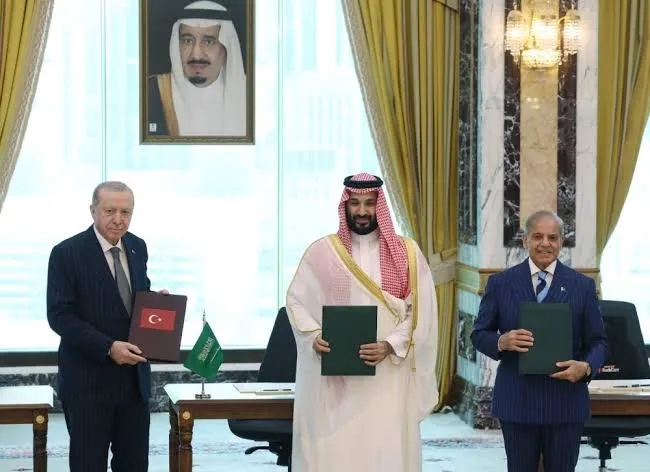
Turkey has unveiled new details regarding the practical steps for implementing the "Mecca Joint Defense Agreement," signed last week with Saudi Arabia and Pakistan. The three nations confirmed their intention to establish strategic, political, and military mechanisms for coordination, alongside plans for joint military exercises and expanded cooperation in defense industries, while also leaving the door open for other countries to join. The Turkish Ministry of Defense stated on Thursday that the agreement aims to create a "sustainable institutional structure" for cooperation among the three countries, moving beyond mere crisis coordination. This announcement came during a weekly briefing in Ankara, where the Ministry clarified that the new mechanisms would involve the Ministers of Defense, Foreign Affairs, and Chiefs of Staff from Saudi Arabia, Turkey, and Pakistan, ensuring regular political and military consultations and decision-making processes. Furthermore, the Ministry indicated that the three nations plan to conduct joint military drills under the agreement, in parallel with strengthening cooperation in defense industries, which includes joint production, as well as the transfer and exchange of technology. Ankara did not rule out future expansion of the pact. The Turkish Ministry of Defense affirmed that other countries might join once the necessary mechanisms are established and operational arrangements are finalized. Pakistan, for its part, had previously confirmed that the agreement is defensive in nature and does not target any specific country, also noting the possibility of future participation by other states. The "Mecca Joint Defense Agreement" was signed by Saudi Arabia, Turkey, and Pakistan on August 7th. One of its most prominent clauses stipulates that any armed attack on one of the three nations shall be considered an attack on all parties, embodying a collective defense formula similar in principle to Article 5 of the North Atlantic Treaty Organization (NATO) charter. Officials from the participating countries have consistently emphasized the defensive nature of the agreement since its signing, asserting that it targets no specific state and is grounded in the right to self-defense enshrined in the United Nations Charter.