Global

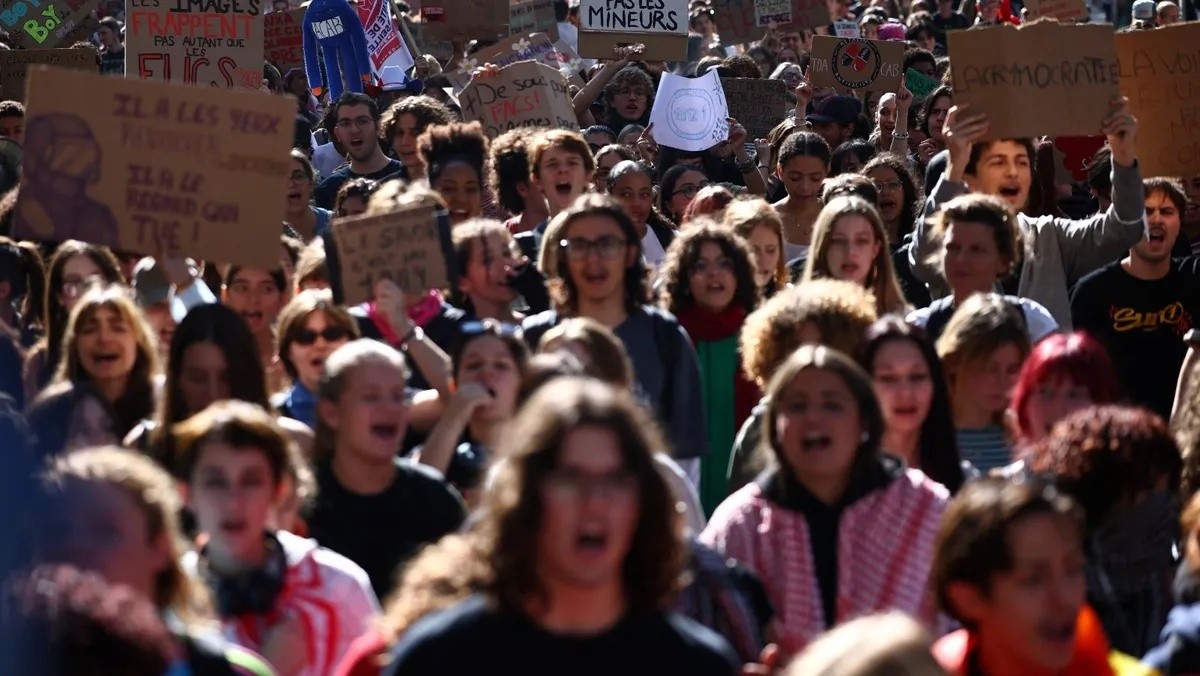
A new wave of student protests has erupted in France, continuing for the third consecutive week, with students demanding improved educational conditions and increased funding for schools amid financial and political pressures facing the government ahead of the 2027 presidential elections. With no clear response from policymakers, high school students are preparing to maintain their demonstrations, supported by student and teacher unions. In Paris, a protest was organized in the 13th arrondissement to gauge whether the momentum of the protests is waning. At the peak of the demonstrations, over 250,000 people took to the streets nationwide demanding more resources for the education sector. Some protests turned violent, leading to clashes with police and the arrest of approximately 7,000 individuals, while authorities reported 488 arrests during the latest wave of student protests. The protests come at a time when the government struggles to increase the education budget, as the Prime Minister seeks to enforce strict public spending limits to reduce the fiscal deficit to a targeted level by 2027. This reflects the economic challenges facing the country, including a sharp rise in borrowing costs to levels unseen in 25 years and increasing sovereign debt risk. Students focus their protests on issues such as staff shortages, overcrowded classrooms, and chaotic timetables, demanding more resources despite emergency measures recently announced by the government. The Education Minister stated that protests have led to the closure of around 200 schools, noting a relative decline in participation compared to previous weeks. Amid these developments, concerns have grown about the potential expansion of unrest, especially with social media calls to revive the "Yellow Vests" protests, which began in 2018 and evolved into a broad national movement. Meanwhile, popular protests continue in Iran, with France warning the Iranian regime over the detention of two French nationals. Additionally, several labor unions have called for protests and strikes on November 5, advocating for job protection, wage increases, and rejecting the government's budget plan. A recent poll showed that more than half of the French population supports the student protest movement, highlighting widespread agreement on the decline of the public education system. In a related development, Swedish youth activist Greta Thunberg joined a demonstration outside a high school in a working-class suburb of Paris, expressing solidarity with French students fighting for their fundamental rights and noting that these movements are being followed globally, inspiring young people worldwide.