Technology

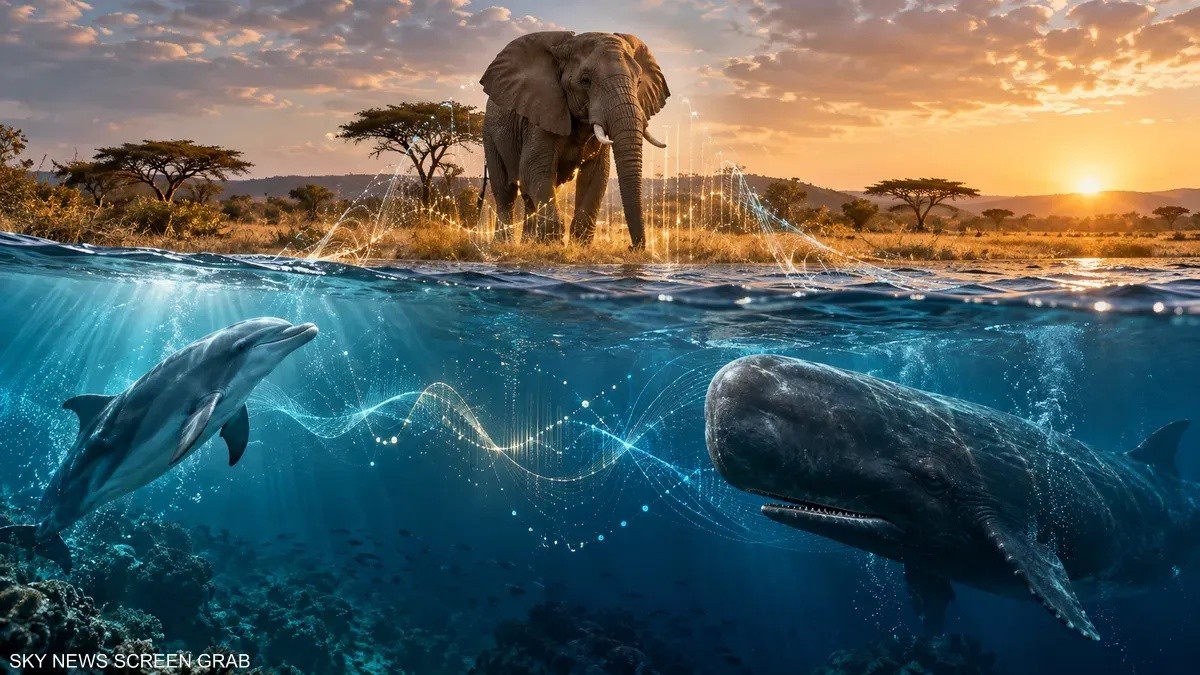
Humanity has long harbored a profound desire to understand the languages of the animal kingdom and communicate with its inhabitants. Today, artificial intelligence offers unprecedented tools to analyze animal vocalizations, revealing intricate patterns in the sounds emitted by creatures such as dolphins, elephants, and whales. Yet, despite these significant advancements, the technology has not transformed into a universal translator capable of deciphering animal thoughts or converting their communications into human language. This fundamental challenge stems from a substantial scientific gap between merely recognizing a sound pattern and truly comprehending its meaning and underlying intent. While an AI model might detect that a specific call recurs whenever a fellow animal approaches or a threat emerges, this observation alone is insufficient to definitively conclude that the call signifies "approach" or "danger" in the nuanced sense understood by humans. This crucial distinction raises a profound question that transcends mere technical capability: Is artificial intelligence genuinely nearing an understanding of animal cognition, or is it primarily uncovering compelling patterns that humans might inadvertently misinterpret? Among the pioneering initiatives in this domain is "Dolphin-Gemma," a collaborative effort involving Google, the Wild Dolphin Project, and the Georgia Institute of Technology. This advanced model underwent extensive training using a vast database of dolphin recordings. It exhibits remarkable abilities, including analyzing sounds, identifying recurring sequences, predicting subsequent vocalizations, and even generating synthetic sounds akin to dolphin calls. Nevertheless, these impressive capabilities do not equate to an inherent understanding of the sounds' underlying meaning. The ability to predict the next sound, for instance, parallels how human language models predict the next word in a sentence—a feat that, by itself, offers no proof of comprehending the animal's lived experience or its intended message. Scientific teams hope these tools will facilitate linking specific sounds to observed behaviors and environmental contexts, gradually paving the way for establishing a limited, shared vocabulary between humans and dolphins, though the project explicitly refrains from claiming to possess a real-time dolphin language translator. Further illustrating this complexity, a study published in "Nature Ecology & Evolution" revealed that African savanna elephants might use individual calls, akin to names, when addressing specific members of their herd. Researchers in this study utilized machine learning techniques to analyze a wide range of elephant vocalizations. Subsequently, they conducted experiments by playing back directed calls. The results showed that the targeted elephant responded more strongly and clearly to the call designated for it, compared to its response to calls intended for other individuals. These findings provide compelling evidence that some elephant calls contain information identifying the recipient. However, this does not mean that scientists are now capable of translating entire conversations between elephants or deciphering all the messages embedded in their communication. In a related context, within the "CETI" project, researchers analyzed thousands of short clicks that constitute a fundamental part of sperm whale communication. This analysis uncovered organized and complex variations in the rhythm, speed, and number of these clicks, alongside accompanying vocal additions. A study published in "Nature Communications" reported that these diverse elements can combine in various ways, suggesting that whale vocalizations possess a more complex structure than previously understood. However, the researchers themselves explicitly confirmed that they still remain completely unaware of what these whales are actually saying. Discovering a sound structure that might resemble an "alphabet" does not automatically translate into knowing the actual words or the specific meanings that whales intend to convey. There is a real risk inherent in "fictional translation"; while artificial intelligence can identify a correlation between a specific sound and a particular behavior, this correlation may not represent the true meaning of the call. Animal sounds can be influenced by multiple factors such as the animal's identity, age, emotional state, or even its surrounding environment, and are not necessarily a single, direct message amenable to translation. Furthermore, animal communication does not rely solely on sound; it is a complex system that may include movement, touch, scents, body posture, and visual cues. Therefore, analyzing sound recordings in isolation from these integrated elements could lead to incomplete or even misleading interpretations. However, these limitations by no means signify a failure of artificial intelligence in this field. On the contrary, these technologies have granted scientists an unprecedented ability to sort and and analyze vast amounts of recordings and to discover subtle patterns that were previously very difficult for humans to observe. Today's machines can hear acoustic details we were unaware of, yet they remain far from proving they truly understand these details. Until that time, the dream of an "animal translator" remains an exciting scientific promise, still far from being a tangible reality in our hands.