policy

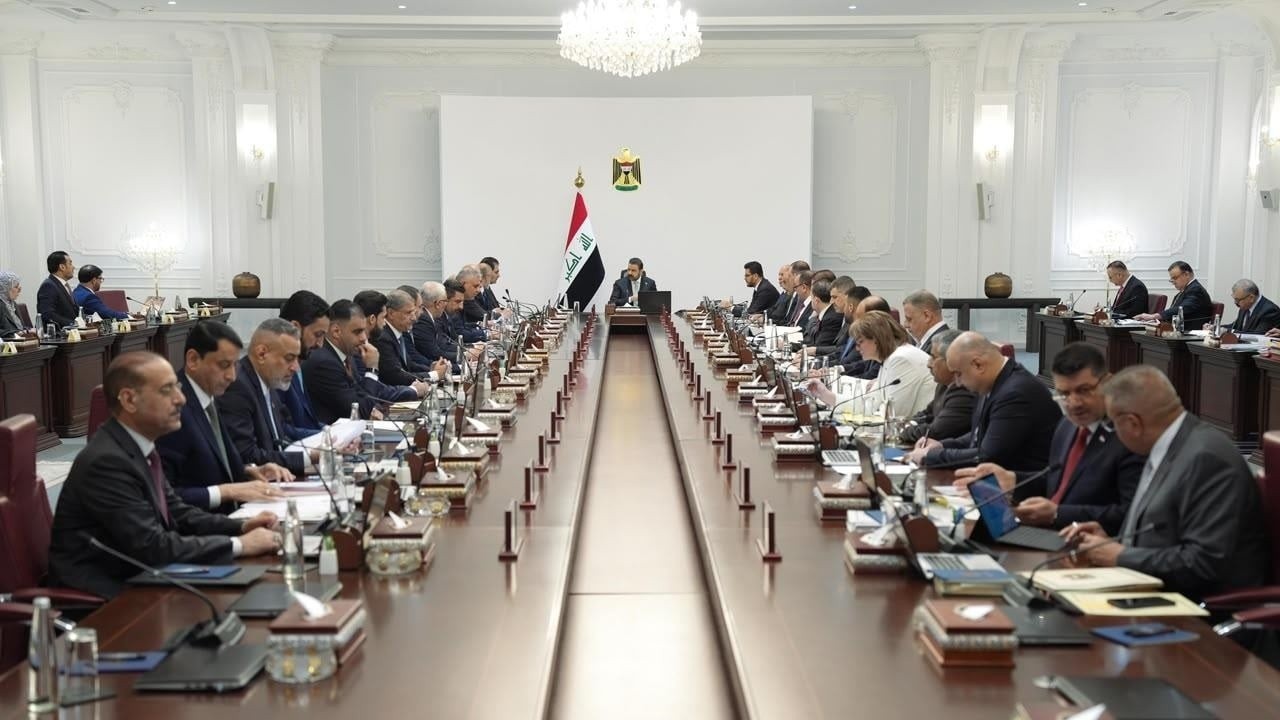
The Cabinet held its regular session on Tuesday, during which it discussed several important issues regarding the general situation in the country and issued significant decisions and directives across various sectors. At the start of the session, the Prime Minister emphasized the necessity for newly appointed ministers to take an oath of honor before the people, affirming their commitment to the constitution and laws, safeguarding citizens' interests, protecting public funds, avoiding personal exploitation of positions, abandoning partisan, sectarian, and tribal loyalties, and adhering to professional governmental work principles to provide the best services and achieve the country's supreme interest. Among the decisions issued, the Ministry of Agriculture was granted the authority to open imports for all agricultural crops until the end of 2026 to ensure food security. The Cabinet also approved the exemption of customs duties on imported solar energy systems to support the private sector and encourage citizens to adopt renewable energy. In the electricity sector, the signing of a contract to supply the northern region with power ranging from 600 to 1000 megawatts was approved by the General Company for Electricity Transmission under the Ministry of Electricity. Regarding the health sector, shipments of medicines, medical supplies, and vaccines were permitted to leave border crossings with deferred customs fee collection, provided the ministry commits to paying them later, and they were exempted from storage fees and fines until the approval of the next federal budget law. To regulate the status of medical and health professionals, a draft amendment to the Medical and Health Professions Grading Law No. 6 of 2000 was approved and referred to the Parliament. Furthermore, the Cabinet ratified the maritime transport agreement between Iraq and Qatar to enhance cooperation in maritime navigation and referred it to Parliament. In the oil sector, a recommendation was approved to enable the Basra Oil Company to use formation water from Dabdaba for washing purposes at the central processing station, in addition to using the business support camp for the development project of the Tuba field until an alternative water source is available. Finally, to strengthen water security, the Cabinet granted the Ministry of Water Resources the authority to directly invite reputable international companies to approve detailed designs for the second phase of the construction of a dam on the Shatt al-Arab in Basra province.