Eco

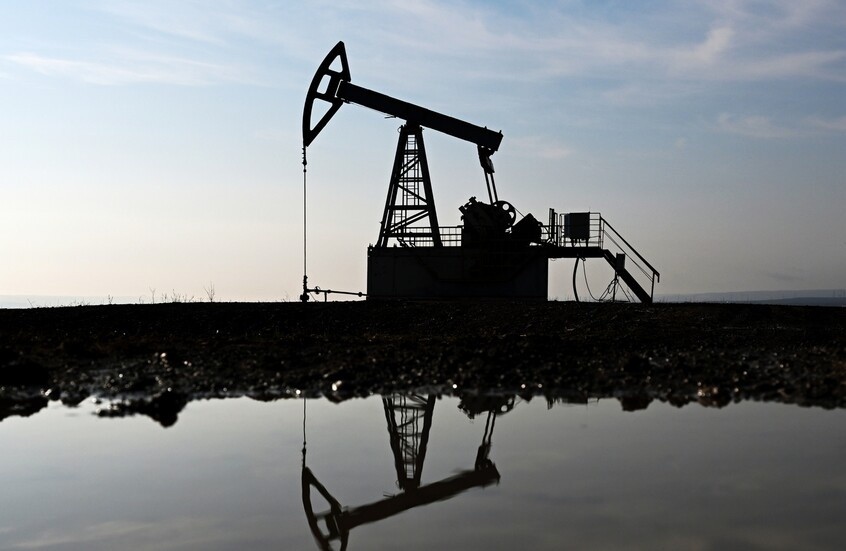
Global energy markets witnessed notable shifts during Wednesday's trading, coinciding with traders and analysts conducting an in-depth assessment of supply risks associated with ongoing tensions in the Middle East, alongside monitoring prospects for increased diesel flow from Russia and its potential impacts on the overall market balance. In this context, futures contracts for various benchmark crudes recorded varying price changes during early trading by half-past eleven as traders moved away from risk, following a previous trading session that saw a divergence in the performance of the two main crudes, where Brent crude recorded a slight decline while US crude achieved limited gains according to data released by Reuters. In an analytical reading of the current scene, Hiroki Kikukawa, a senior analyst at Nissan Securities Investment, pointed out that persistent concerns regarding supply security due to the regional conflict play the most prominent role in driving prices upward. He added, explaining that the prospects of increased Russian diesel exports could contribute to mitigating the severity of supply shortages in global markets, which may act as a safety valve limiting any sharp fluctuations in either direction upwards or downwards, while expecting at the same time that trading of US West Texas Intermediate crude will move within a specific price range between ninety and one hundred dollars per barrel. In a related development, an official source at the Saudi Ministry of Energy reported that on Tuesday evening, one of the administrative buildings belonging to Saudi Aramco in the city of Dhahran in the Eastern Province of the Kingdom was targeted, resulting in a limited fire in the targeted location. The source himself explained that the competent authorities immediately began dealing with the incident and taking all necessary measures and procedures to control it, while confirming at the same time that no human injuries or deaths occurred as a result of this attack. In a related context, the Saudi Cabinet, during its session held under the chairmanship of Crown Prince Mohammed bin Salman on Tuesday, affirmed that the terrorist Houthi militia will face severe consequences as a result of its crimes and repeated sinful attacks targeting the Kingdom's airports, as well as targeting the holy sites in Makkah and Al-Madinah and visitors to the Two Holy Mosques, and civilian and vital economic facilities and objects. Regarding supply and demand data, the Organization of the Petroleum Exporting Countries (OPEC) announced on Tuesday that the OPEC+ alliance had recorded a sharp and notable increase in production levels during September, and this increase was mainly driven by increased production by Saudi Arabia, despite the continuation of disruptions and obstacles facing maritime shipments through the Strait of Hormuz brought about by the Iran war. In this context, two senior Iranian officials revealed to Reuters that Tehran is using new strategic methods to target commercial ships passing through the strategic Strait of Hormuz, in a clear endeavor to keep oil prices high and influence in one way or another the course of the US midterm elections.