Security

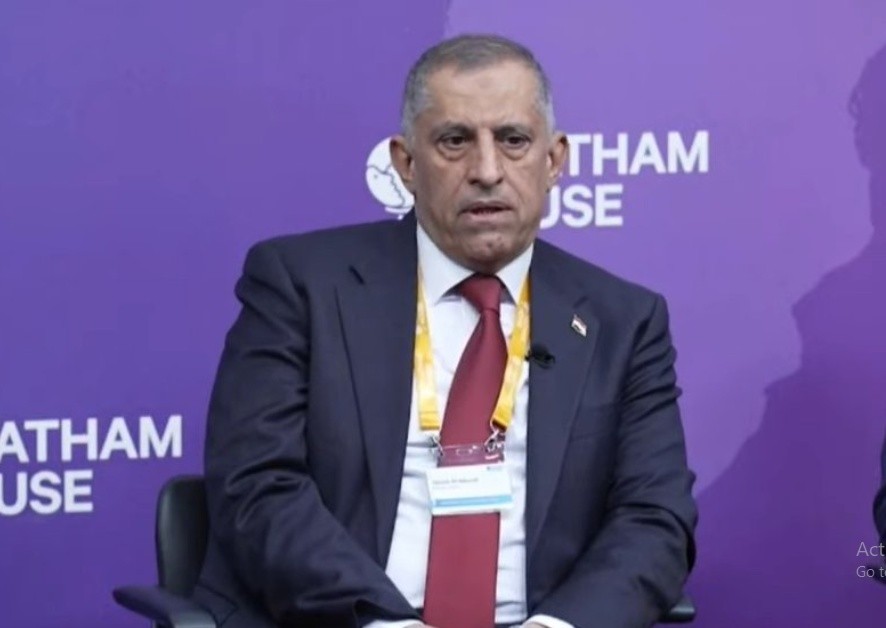
National Security Advisor Qasim Al-Aboudi affirmed that Iraq is actively working to eliminate the phenomenon of weapons outside state control, indicating that the arms control file will conclude by the end of June. He noted that five factions have signed commitments to join the agreement, with three having fully surrendered their weapons. During a dialogue session at the Chatham House in London, Al-Aboudi highlighted Iraq's growing global attention due to its geopolitical location and significance as an energy source, with oil production expected to reach five million barrels per day in the coming months, amid ambitions to increase it to ten million barrels daily. He emphasized that today's Iraq differs from the pre-2003 era, as it does not interfere in other countries' security affairs, does not support political groups against their regimes, does not maintain armies beyond its borders, nor is part of any military alliance against any party. He pointed out that following the withdrawal of U.S. forces, Iraq no longer hosts foreign bases, unlike other countries, and is a democratic state witnessing elections and peaceful power transitions, enjoying a reasonable degree of freedom of opinion. Al-Aboudi added that Iraq seeks to build good relations with all countries, especially neighbors, despite some hesitation and slow dealings from some based on concerns related to weapons and armed factions. Regarding regional challenges, he stated that Iraq faces more issues with Iran and Turkey than with Gulf countries, mentioning Turkish forces on Iraqi soil and armed opposition groups causing tensions, yet economic relations continue with a trade volume of about $20 billion annually. He also noted disputes with Iran over border demarcation, shared oil fields, and water resources, alongside four opposition parties to Iran in the Kurdistan Region causing problems, though relations with Tehran remain normal. On the arms file, Al-Aboudi stressed that weapons outside state control harm Iraq's sovereignty, and the government has devised a plan addressing the issue, including the withdrawal of U.S. forces, removing justification for weapons outside official institutions. He highlighted that the government has communicated uniformly with all parties, including Turkey and Iran, about restoring full Iraqi sovereignty, successfully convincing Turkey to withdraw after confirming the government's seriousness in handling the PKK issue. He affirmed that Iraq holds many opportunities and is safer compared to many countries worldwide, with five factions signing commitments to the agreement, requiring weapon surrender for government participation. He explained that three factions have fully handed over their weapons, while two others have pledged to do so in the coming months, with ongoing dialogue; one showing great flexibility and the other needing more time. He concluded by stating that the issue of weapons outside state control will be resolved by the end of June.