Eco

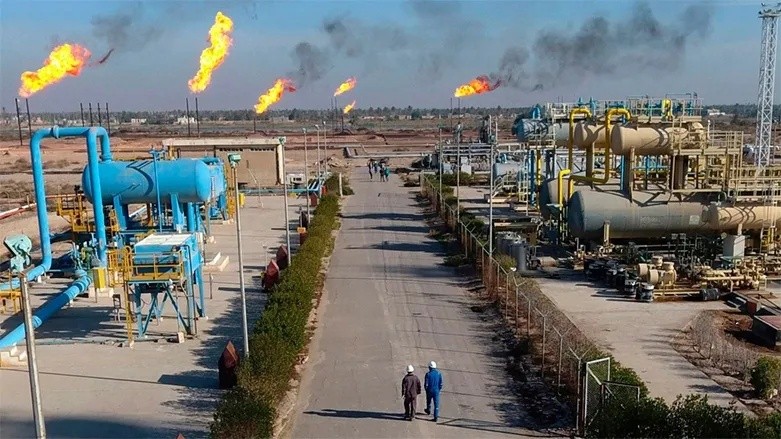
The Ministry of Oil is moving towards strengthening its national energy strategy, affirming its commitment to implementing a package of ambitious projects aimed at investing associated gas and completely ending its flaring, in addition to raising the refining capacity for petroleum derivatives. Work is currently underway on four projects to utilize associated gas with a total capacity of 1.4 billion standard cubic feet. The Ministry is also working to increase the refining capacities for petroleum products, with the goal of reaching an output of approximately 5 million liters of high-octane gasoline and 10 million liters of gas oil. In the context of these efforts, the Ministry's spokesperson, Salim al-Rikabi, confirmed that the Ministry is currently focusing on completing a group of vital projects that will bring an end to gas flaring by the end of 2029. He clarified that these initiatives represent a top priority due to their effective role in leveraging the country's gas wealth, securing its fuel and energy needs, and mitigating the environmental damage resulting from flaring operations. Al-Rikabi emphasized that the Ministry is diligently working on a set of qualitative projects in this domain. Among the most prominent of these are the Artawi project, targeting a production capacity of 600 million standard cubic feet in two phases, the Ben Omar project with a capacity of 300 million standard cubic feet, in addition to the Nassiriya project with a capacity of 200 million standard cubic feet, and the Halfaya project aiming for 300 million standard cubic feet, alongside other complementary projects. The Ministry's ambition is not limited to associated gas alone; it extends to include the investment of free gas. In this regard, the Ministry is working to develop gas in the Akaz and Mansuriya fields. These steps fall within broader plans aimed at developing national gas resources, increasing the quantities of gas produced, and effectively utilizing it for electricity generation, supporting industrial sectors, and meeting various other uses. Regarding the refining sector, al-Rikabi noted that the Ministry of Oil is giving special attention to a number of ongoing expansion and development projects. These projects aim to boost refining capacities, improve the quality of petroleum products, and meet the local market's needs for petroleum derivatives. Among these prominent initiatives is the Fluid Catalytic Cracking (FCC) project in Basra, which will contribute to supplying the market with petroleum products through the production of approximately 5 million liters of high-octane gasoline and 10 million liters of gas oil. The Ministry's plans also include expansion projects for the Diwaniya, Maysan, and Najaf refineries, which will enhance the refining sector's capabilities and elevate the production capacities of Iraqi refineries, contributing to securing the local market's needs for petroleum derivatives. The Ministry reaffirms its continuous execution of strategic projects within the oil, gas, refining, and marketing sectors, in accordance with plans aimed at boosting production, diversifying export outlets, utilizing associated and free gas, and increasing refining capacities. All these efforts seek to achieve greater economic value for the national oil wealth and support the Iraqi economy.