Eco
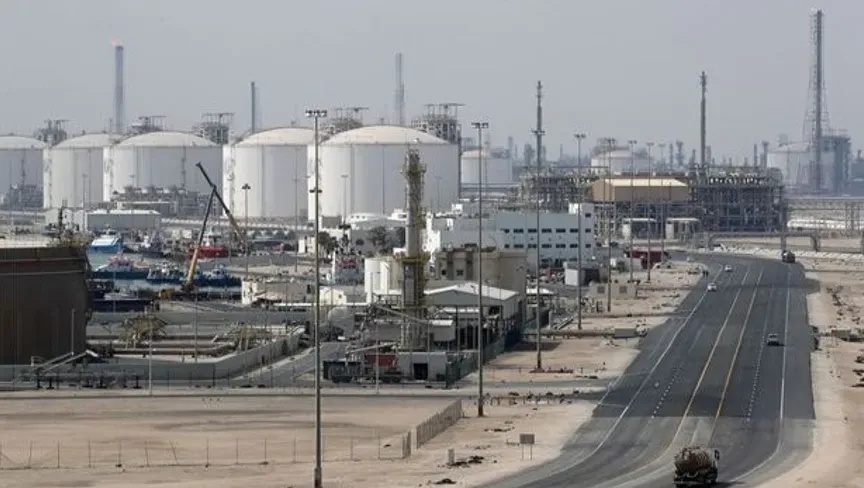
Qatar has reduced government department budgets by up to 30% and curtailed foreign aid spending by approximately 85%, a move reflecting the financial repercussions of a regional conflict on one of the world's wealthiest nations. This budget reduction, whose total value for government sectors remains undisclosed, is part of Doha's efforts to counteract a sharp decline in liquefied natural gas (LNG) revenues. LNG operations, Qatar's primary revenue source, have largely ceased since early March due to attacks on operational facilities and the effective closure of the Strait of Hormuz. The International Monetary Fund (IMF) forecasts an 8.6% contraction in Qatar's GDP this year, the largest among Gulf Cooperation Council (GCC) nations. Total projected expenditure in Qatar's approved budget for the current year is about 221 billion riyals. Last May, it was announced that the budget deficit surged over twentyfold in Q1 to 10.3 billion riyals, influenced by the regional conflict which began on February 28. Despite partial resumption of production at some Ras Laffan facilities, Doha, the world's second-largest LNG exporter, suspended efforts to accelerate output following a tanker attack in the Strait of Hormuz in July. Qatar is seriously considering further significant public spending cuts next year if the crisis extends into the final quarter. The total volume of Qatar's foreign aid is unknown. However, the Gulf state last year granted $1.5 billion to the UN Office for the Coordination of Humanitarian Affairs (OCHA), ranking among the agency's top five donors, based on previous data.