Eco

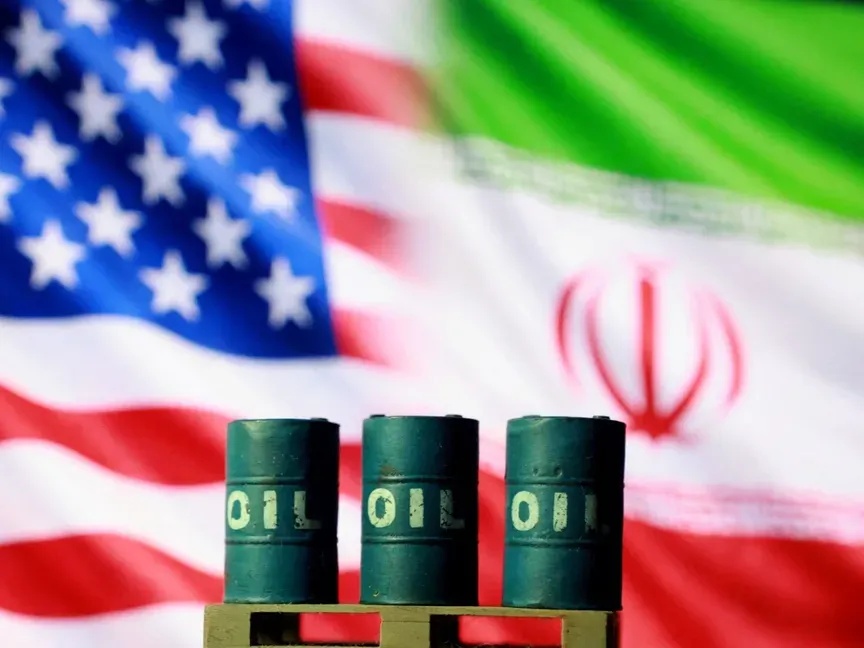
US-Iranian understandings open the door to a wide recovery of Iranian oil exports after years of sanctions. Revenues are expected to exceed $60 billion annually, amidst bets on de-escalation of tensions and fears of reinforcing Tehran's regional influence. The Iran-US agreement permits the sale of Iranian oil and fuel. Indeed, this week several Iranian tankers loaded with oil departed Iranian ports and crossed the US naval blockade line, an early indicator of the expected flow of exports, according to "The Wall Street Journal". The primary pillar of sanctions imposed on Iran for over a decade, aimed at isolating the regime and curbing its nuclear ambitions, is crumbling with the entry into force of the US pledge to allow Iran to sell oil. A US administration official stated that this could be reversed if future talks are not fruitful. This move will grant Iran an opportunity to widely sell oil to customers who largely avoided purchasing Iranian crude in recent years. Iran was producing about 4% of total global crude oil before the outbreak of the war on February 28. For over a decade of sanctions, Iranian oil exports were confined to clandestine shipping networks, often sold at prices significantly below global rates. Most sales went to independent refineries in China, known for their tough negotiating stance. Richard Nephew, a former US official specializing in sanctions and currently working at Columbia University, told "The Wall Street Journal": "These understandings will not necessarily throw open the door to the Iranian economy, but Iran will earn substantial revenues and will likely be able to access them." Short-Term Revenue Expectations Nephew predicted that Iran would achieve revenues of eight billion dollars during the first two months of the agreement. Over a full year, Iran could earn more than $60 billion from oil sales, based on its pre-war production levels and current prices, according to "The Wall Street Journal". The broad powers granted to the Iranian oil sector reflect the extent of pressure faced by the administration of former US President Donald Trump to reach an agreement. The agreement, which includes a potential $300 billion investment plan, is based on the gamble that financial flows will curb behaviors deemed destabilizing by Washington. However, concerns focus on the possibility that new revenues could help the Iranian regime consolidate its survival and rebuild its military capabilities. Michael Singh, former Senior Director for Middle East Affairs at the National Security Council during the George W. Bush administration, said: "The risk lies in strengthening the regime through the injection of new funds." He added: "Supporting proxies and even manufacturing missiles and drones is not very costly, whereas managing the state efficiently is the most expensive matter for Iran." Impact on Global Oil Market A senior US official said on Tuesday that Iran would receive initial sanctions relief on its oil exports, but the continuation of this relief would depend on Tehran's adherence to US conditions regarding its nuclear activities and the reopening of the Strait of Hormuz. A large proportion of Iran's oil revenues generated in past years remained frozen abroad due to financial sanctions. Tehran managed to access some of these funds through complex banking channels, often passing through Gulf countries, in addition to using cryptocurrencies. However, these operations were slow, costly, and unreliable, often forcing Iran to keep funds outside the country. This could change completely, as the agreement stipulates that the United States will work to open banking channels allowing Iran to repatriate oil sales revenues. Arab intermediaries said the agreement represents a clear gain for Iran. It could also lead to the emergence of a new and more unfettered competitor in global oil markets, as analysts expect the reopening of the Strait of Hormuz to lead to an oil supply surplus next year. The International Energy Agency warned on Wednesday that reaching a permanent settlement to the dispute could lead to an oil supply surplus next year. The agency projected that global supply would rise by approximately eight million barrels per day by 2027, far exceeding the expected recovery in global demand of two million barrels per day. US Blockade: Signs of Easing The US naval blockade, which began last April, led to a sharp decline in Iranian crude oil exports from about 1.1 million barrels per day in March to just 65,000 barrels per day in May, according to United Against Nuclear Iran. With oil storage facilities full, Iran was forced to shut down some wells, leading to a production decline of about a third to 2.3 million barrels per day in May, compared to about 3.5 million barrels per day before the war, according to the International Energy Agency. What is not exported is consumed domestically. Although the US blockade was still officially in effect on Tuesday, signs of easing began to appear. Three tankers carrying more than 5 million barrels of Iranian crude oil departed Chabahar port and crossed the US blockade line since Tuesday, according to data from United Against Nuclear Iran and ship tracking data from MarineTraffic. The voyages of tankers "Sonia 1," "Diona," and "Hero 2" represented the first such crossings since the US blockade began in April. Claire Youngman, shipping risk and information manager at Fortecsa, said: "The timing is critical," adding that the vessels appeared to be preparing in advance for a potential agreement. The three ships were sailing outside the Gulf of Oman on Wednesday, with their tracking devices activated. Sanctions Lift In the long term, Iran's full integration into global oil markets will depend on the current US waivers transitioning into a permanent lifting of sanctions. According to the understandings, this is linked to reaching a broader agreement on Iran's nuclear activities. There was an initial test for the Iranian oil industry under sanctions relief last March, when the Trump administration granted a 30-day exemption from sanctions imposed on Iran despite continued shelling in Tehran, a step aimed at preventing a sharp rise in fuel prices. India purchased a shipment of about two million barrels in April, according to United Against Nuclear Iran, while China accounted for 80% of Iranian oil exports. Nevertheless, other buyers remained hesitant, as most Iranian oil available for sale was controlled by entities subject to sanctions due to their links with the Islamic Revolutionary Guard Corps. Naveen Das, lead crude oil analyst at Kepler, said: "There will be some hesitation initially, but if we see a solid agreement with full sanctions relief after the 60 days, I believe we will see buyers in Asia and Europe returning to purchase Iranian oil without major issues." With an increase in the number of buyers willing to purchase Iranian crude, Tehran will be able to achieve higher profit margins for each barrel sold, which could encourage new investments to boost production and add significant quantities to global markets. Iranian oil production costs are relatively low, ranging between $10 and $30 per barrel, while US shale oil breakeven prices range between $60 and $70 per barrel. Bridget Payne, head of oil and gas forecasts at Oxford Economics, said: "If infrastructure remains intact and export routes are reopened, Iran could regain lost production relatively quickly. However, increasing production to levels significantly above pre-conflict levels will take longer." She estimated that Iran could add about one million barrels per day above pre-conflict levels within two to three years if sanctions and secondary sanctions are fully and permanently lifted. She added: "But this will require foreign capital, advanced technology, and specialized oilfield services." Before the 1979 Iranian Revolution, Iran was producing between 5 and 6 million barrels per day. However, this level later declined due to damage to infrastructure during the Iran-Iraq War, loss of foreign expertise, and decades of continued underinvestment, according to "The Wall Street Journal".