policy

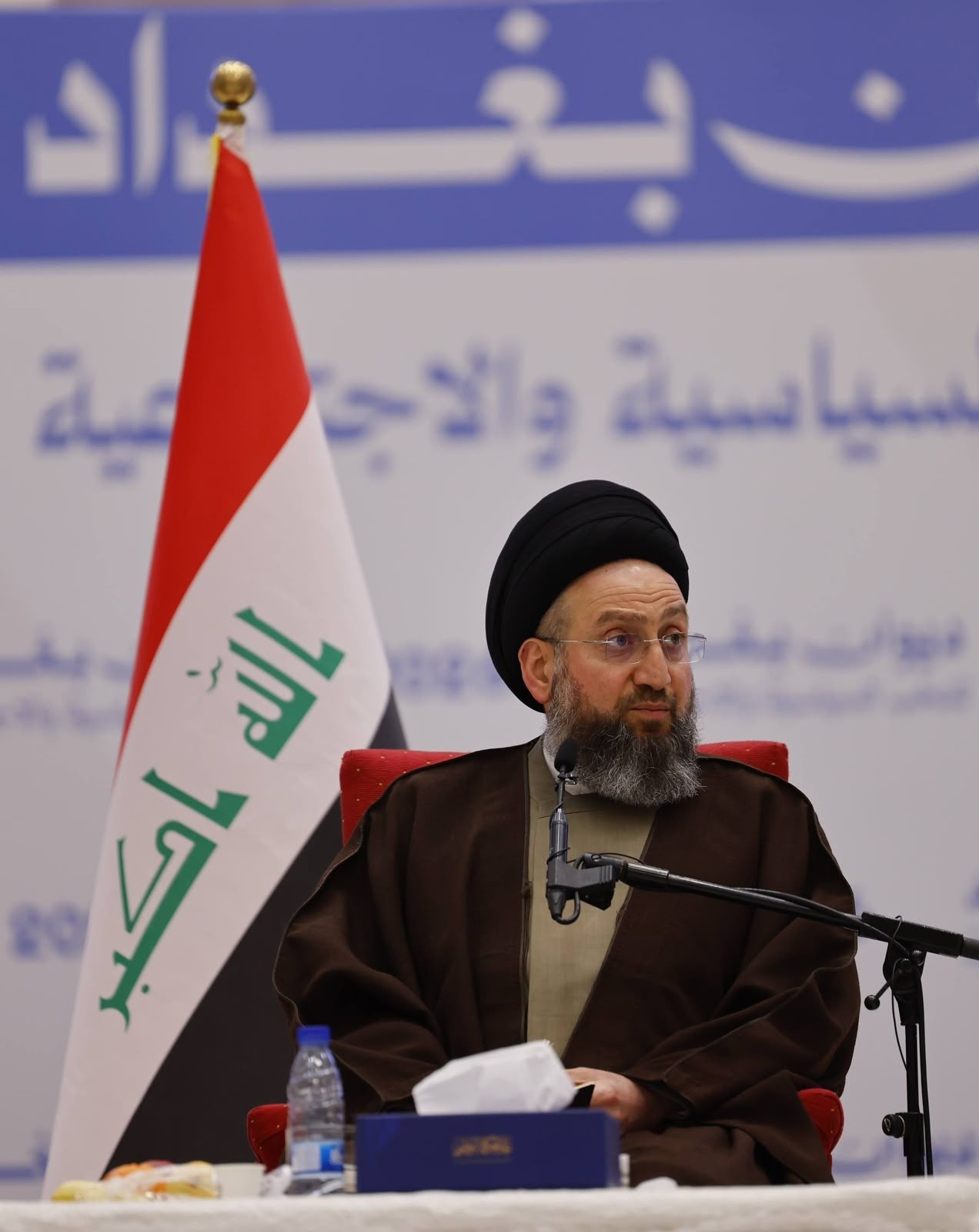
Amir al-Hakim, leader of the Wisdom Movement, emphasized today the constitutional reality of decentralization and the necessity of holding local elections on schedule while respecting the outcomes of democracy. In a statement, al-Hakim highlighted the region's tense anticipation between the possibility of a devastating war surpassing previous conflicts or reaching an agreement to prevent further escalation. He praised the resilience of the Iranian people amid challenges and noted that the conflict involving Iran has influenced elections in the United States and Israel, as well as economic factors impacting these results, as confirmed by U.S. government leadership positions. He pointed out that regional countries, including Iraq, are striving to avoid war, restore stability, and seek acceptable solutions satisfying all parties. Al-Hakim described the conclusion of the international coalition’s mission in Iraq as a sign of recovery, calling for reassurance messages among Iraq’s communities to eliminate all forms of anxiety through formulas that ensure everyone’s security. He stressed the importance of maintaining security and constant readiness to confront terrorism, warning against terrorist attempts to assert their presence. He urged progress in addressing weapons outside state control according to agreed timelines, encompassing all who fit this description, expressing optimism that this task will be completed through dialogue and understanding. He affirmed the importance of managing Iraq’s interests based on the principle of balance, considering it a fate that must be acknowledged. He stated that problems can be mitigated but not entirely erased. Al-Hakim emphasized distinguishing between freedom of expression and infringement on others’ privacy, asserting that freedom is acceptable and guaranteed as long as it does not infringe upon the freedoms and rights of others. He called for diversifying oil export outlets as a strategic necessity through pipelines connecting Iraqi oil to ports on the Mediterranean and Red Seas, urging full adherence to the constitution without discrimination since it was drafted to consider everyone’s interests. He highlighted the importance of accepting the interpretation of the competent authority in cases of constitutional disputes. He pointed out the need to add constitutional articles and legislate important strategic laws such as those related to oil, gas, and the Federation Council, emphasizing the use of these laws to strengthen Iraq’s unity. He noted that parliamentary systems require significant relationships among parliamentary blocs to enhance their role and influence, praising Iraq’s openness to its regional environment and the easing of tensions with neighboring countries. He called for considering regional events when prioritizing the state’s goals and ambitions. Al-Hakim renewed his support for decentralization, warning against desires for monopolization and poor local governance that have led to the decline of decentralization principles. He affirmed the importance of separation of powers and the independence of each authority. He also stressed the need to resolve issues between the central government and the Kurdistan Region, expressing confidence in the wisdom of the regional leadership to overcome crises and affirming that the region’s stability is an integral part of Iraq’s stability. He called for flexibility to reduce points of disagreement among all parties, underscored the importance of eliminating social crises, and combating any inflammatory rhetoric based on sectarian or ethnic grounds. He advocated balancing the preservation of freedoms with criminalizing inciting speech. He noted the government’s direction to increase revenues amid financial shortages and declining resources, emphasizing the importance of Iraq’s internal and regional stability.