Local

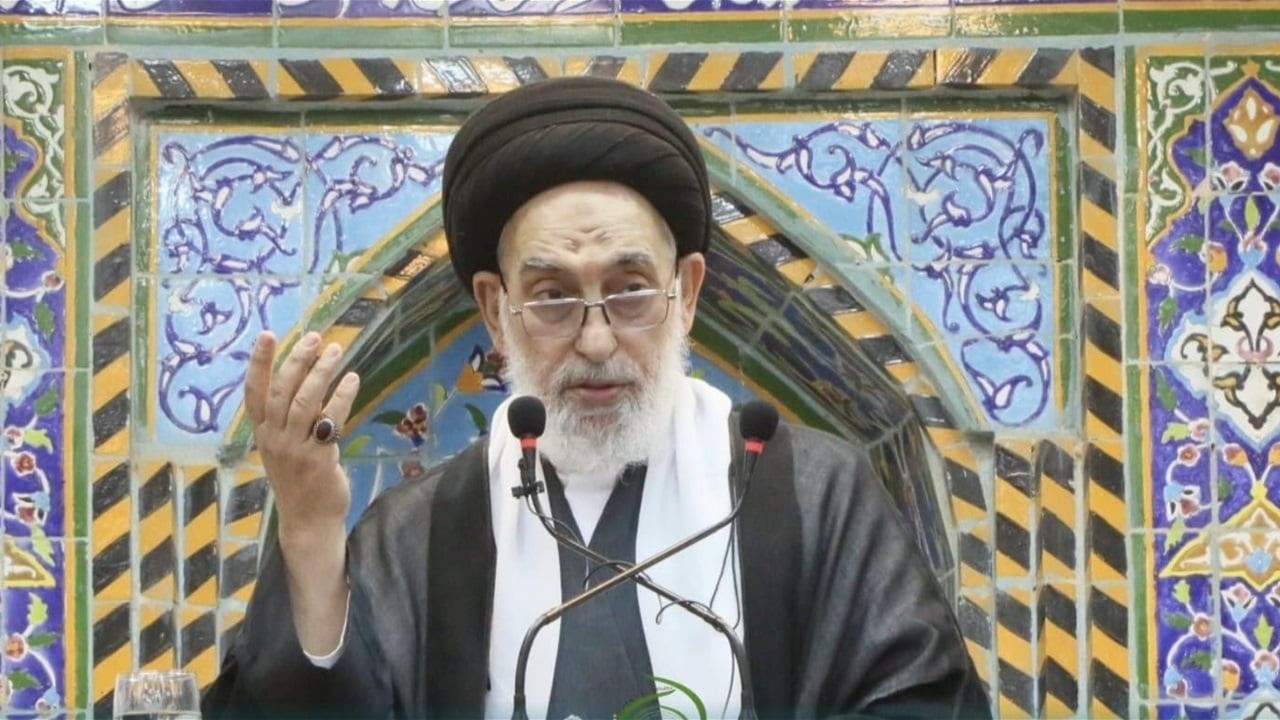
The Friday prayer sermon in the city of Najaf shed light on a series of prominent political, regional, and international developments, as the Imam of Najaf Friday prayers, Sayyed Sadr al-Din al-Qabbanji, addressed sensitive files concerning internal Iraqi affairs, foreign policies, and their implications on the region. At the outset of his remarks on the local scene, al-Qabbanji discussed the completion of the ministerial cabinet in the government of Prime Minister Ali al-Zaidi, pointing out that voting on ministers had already taken place, including the ministries of interior, defense, planning, higher education, culture, construction, labor, youth and sports, tourism, state, and digital economy. He drew attention to the creation of three additional ministries, namely the Ministry of Digital Economy, the Ministry of Tourism, and the Ministry of State, alongside the creation of four parliamentary positions for the Prime Minister, at a time when Iraq is suffering from a difficult financial crisis and a clear economic predicament. The religious authority has repeatedly emphasized the necessity of not wasting public funds, explaining that these new formations and newly created positions burden the state financially, with no real or convincing justification for doubling these parliamentary positions or establishing those ministries. Moving to the regional file, the preacher addressed the Iraqi government's position of condemning the attacks launched by the Houthis targeting airports in the Kingdom of Saudi Arabia in the cities of Riyadh and Dammam. He affirmed that Islamic-Islamic fighting is completely unacceptable in any way, but simultaneously stressed the importance of condemning the ongoing bombardment against the Houthis and the coalition called for by Saudi Arabia, involving Israel, Turkey, and Pakistan under US leadership aimed at crushing and eliminating them. He expressed great surprise at the complete silence regarding the ongoing aggression against the Houthis, contrasted with the speed in condemning the strikes on Riyadh and Dammam airports, calling for the necessity of denouncing the bloody attacks taking place on the Gaza Strip and its people, in addition to the continuous bombardment in southern Lebanon and Syrian territory. He paused at the statements of Israeli Prime Minister Benjamin Netanyahu, in which he openly declared he would not withdraw from territories he recently occupied in Syria and Lebanon, noting that all these ongoing developments occur amid complete Arab silence and a total absence of official condemnation. On the international level, al-Qabbanji leveled sharp criticisms at the hijab ban imposed on female students and teachers in Azerbaijani schools, despite Muslims making up ninety-five percent of Azerbaijan's population. He indicated that the government there took practical steps to implement this decision, which resulted in the expulsion of hundreds of thousands of female students and teachers from educational institutions, questioning the fate of women's rights, personal freedom, and democratic slogans raised by those parties, which in his view have turned into a fake cover used to fight religion amid complete silence from international human rights organizations. In conclusion, the Imam of Najaf Friday prayers renewed his strong condemnation of these practices by the Azerbaijani government, calling on the Iraqi government to take an official stance denouncing this decision and showing full solidarity with the Azerbaijani people and their families, both men and women, considering that the issue goes beyond the local or national dimension to constitute a blatant assault on Islamic values and religious constants based on the noble hadith regarding caring for the affairs of Muslims.