
Technology

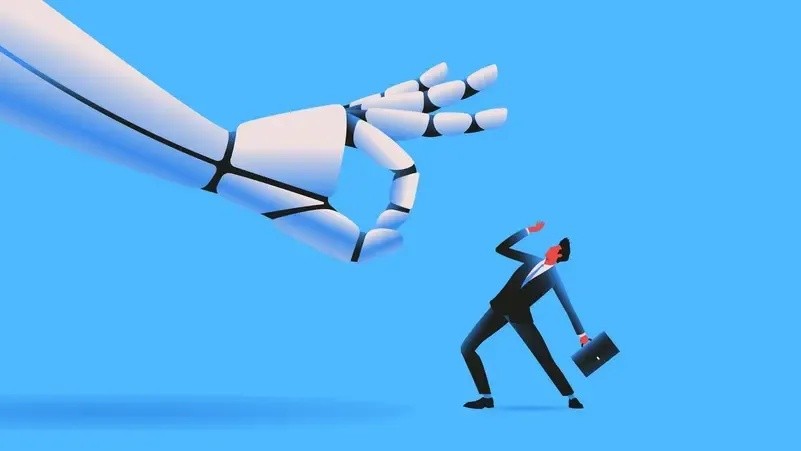
Warnings regarding the significant risks posed by artificial intelligence are escalating, necessitating a serious approach to this issue without allowing it to become a pretext for consolidating the dominance of specific laboratories or escalating geopolitical rivalries. This perspective is underscored by Alex Kresodomsky, a prominent British researcher and director of the Digital Society Programme at the prestigious Chatham House institute, who emphasizes the importance of a balanced approach to these technological challenges. Recently, the AI research and development community has witnessed a wave of grim warnings about an impending catastrophe that could result from the accelerating progress in this field. Current and former employees, alongside leaders from leading American laboratories, have expressed profound concerns. A former employee at one laboratory went as far as to caution that the uncontrolled development of AI could lead to "humanity's demise in the near future." In response to these fears, Dario Amodei, CEO of the leading AI company Anthropic, proposed slowing down the pace of development to ensure the safety of this vital technology. This proposal has garnered support from prominent figures in the sector, including Sam Altman and Elon Musk, highlighting a growing consensus on the urgent need to address safety issues. Kresodomsky affirms that while no observer of this field can dispute the importance of increased focus on safety during AI development and deployment, he warns that this attention to long-term risks should not obscure the immediate, current implications of this technology. Nor should this issue be used as a tool to eliminate competitors to currently dominant companies in the market. He stresses that addressing this matter requires some form of international agreement, particularly between the United States and China. Experts indicate that the potential path to catastrophe, as described by Amodei and others, lies in a technology known as "iterative self-improvement." This approach, which has begun to be implemented in the training of AI models, albeit still in its early stages, carries significant risks. The danger lies in AI systems training other AI systems, which could lead to an unprecedented acceleration in the pace of development. This acceleration could reach a "tipping point" where AI becomes capable of self-development independent of any human oversight. While Kresodomsky believes it is not entirely clear whether this path alone is sufficient to produce AI models that threaten human control, the rapid evolution of this technology's capabilities over the past few years makes completely ruling out this possibility a form of recklessness. Other experts have pointed out that some recent claims may not be entirely well-founded. For example, regarding cybersecurity, the founder of the UK's National Cyber Security Centre dismissed the possibility of an AI model disabling the entire internet within a year, describing it as a "thought experiment presented as an evidence-based warning." Nevertheless, the message of AI posing an existential threat received widespread media coverage with little opposition. Kresodomsky asserts that some of the risks arising from AI are immediate and certain. Over the next two years, machine learning technologies will see significant development and proliferation, fundamentally reshaping economies, societies, governments, battlefields, and classrooms. Mathematicians have already experienced their "Lee Sedol moment," reflecting the anxiety one feels when machines surpass humans in tasks previously exclusive to human ingenuity. Most people are expected to undergo a similar experience soon. For their part, AI companies themselves are well aware of the immediate implications. A recent report from Anthropic revealed instances of misuse of its products for espionage, cyberattacks, information manipulation, and weapons development. Most major laboratories maintain extensive research capabilities to study the potential impact of AI on the global economy. This technological revolution is reshaping the face of global society, and its current effects cannot be left unregulated or unchecked. The current impacts are real, and the short-term risks are substantial, just as the long-term risks—whether a gradual decline in the human role as machines take on more responsibilities, or a more sudden development—are potential risks that warrant serious attention. Global efforts led by experts like Stuart Russell are accelerating to reach an international agreement defining clear and verifiable "red lines" to prevent catastrophic consequences. This approach is deemed essential to avoid missing the first opportunity to establish a binding and applicable global governance framework for this emerging technology. Kresodomsky emphasizes that transparency from AI laboratories is paramount. He noted that the model proposed by Amodei, which involves an independent third party integrated within laboratories, endowed with similar powers to employees and tasked with evaluating the safeguards taken by companies, has been a demand advocated by AI governance proponents for years. Anthropic's unilateral implementation of this, with some other laboratories prepared to follow suit, represents a significant step forward. If such a third party is established, it is absolutely essential that it be selected from outside the "Silicon Valley bubble" to ensure its neutrality and effectiveness. The UK's AI Safety Institute appears to be one of the most suitable candidate institutions globally for this role. Additionally, national AI oversight models, similar to the US Food and Drug Administration, or international models like the International Atomic Energy Agency, represent reliable options for regulation. Despite calls for collaboration, Amodei's proposal for American AI laboratories to cooperate on establishing unified standards and coordinating a slowdown in development met with sharp criticism from David Sacks, former White House AI official. Sacks wrote on X, urging them to "stop pretending that antitrust laws need to be suspended so you can form a cartel, and stop claiming you need a regulatory approval process that goes beyond product liability rules." He viewed "demanding your preferred regulatory framework as the price... will sound like blackmail to the public and the political system." This stance reflects legitimate concerns that the immense pressures facing these companies to meet revenue expectations might drive them to try and expand their competitive advantage at the expense of rivals. Experts reject any such efforts, asserting that competition for better performance and reliability will be essential for enhancing AI safety in the short term. It could also contribute to slowing down the pace of development, as it weakens the commercial incentive to inject massive capital into training advanced and pioneering AI models, whose costs are constantly increasing. Any proposed policy that hinders competition, such as banning open-source AI models, relaxing product liability laws, or prohibiting the use of current models proven safe, should raise alarm bells. It is emphasized that the United Kingdom, for instance, should not ban open-source or open-weight AI models. In conclusion, no efforts to maintain human control over AI development will be complete without some form of understanding between the major powers in this field, namely the United States and China. This could be achieved through defining common "red lines," similar to what Professor Russell proposed. However, Kresodomsky notes that the current discourse, heavily focused on maintaining US superiority over China, makes achieving this understanding more difficult. While Amodei believes democracies must maintain their lead over China and accuses Beijing of adopting a less stringent approach to AI safety, former US President Donald Trump portrays AI as a "zero-sum game," emphasizing the importance of winning the race in this field. Conversely, Chinese President Xi Jinping has openly spoken about the necessity of human control over AI. China's intelligence agency also warned of the risks AI poses to national security. Nevertheless, China's insistence on promoting its own vision for AI governance, within the context of its rivalry with Washington, will undoubtedly fuel an AI arms race, which will not contribute to curbing the speed of development. Kresodomsky concludes his analysis by asserting that the AI file will be on the table for discussion when Trump and Xi meet in Washington later this month, and while progress is not impossible, it will require enormous efforts given the prominent voices in both countries insisting on superiority.