
Technology

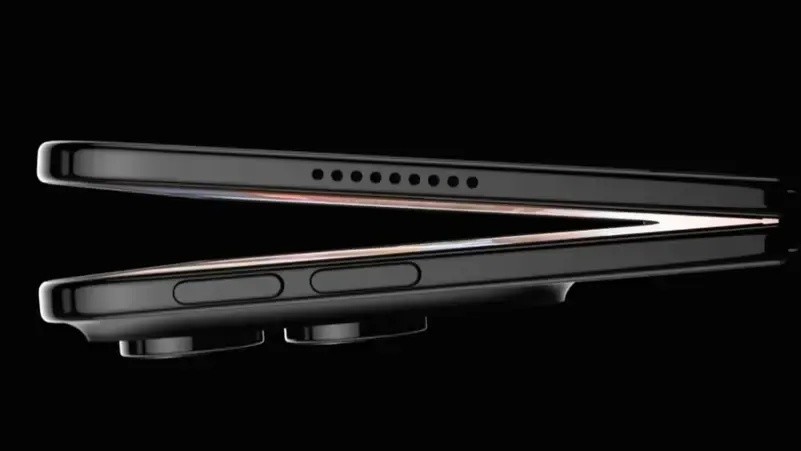
The tech world eagerly awaits Apple's first foldable iPhone, potentially named 'iPhone Ultra'. Despite an expected price tag exceeding $2,000 USD, recent reports and leaks suggest this device will launch missing several crucial features found in the upcoming iPhone 18 Pro and iPhone 18 Pro Max models. These predictions, from a specialized tech report reviewed by 'Al Arabiya Business', raise questions about the phone's value proposition against its premium cost. Set for a September 9th unveiling, the 'iPhone Ultra' is anticipated with an ultra-thin design, titanium frame, and elegant glass back. This design suggests a strong resemblance to the ultra-thin 'iPhone Air', known for lacking features like an ultra-wide and telephoto camera, a physical SIM slot, and stereo speakers. Consequently, Apple may face similar design compromises with the 'iPhone Ultra', potentially explaining the absence of certain key functionalities. Among the most prominent expected omissions is Face ID facial recognition. This is attributed to the phone's extremely thin design, likely insufficient for Apple's TrueDepth camera array. Instead, Apple is projected to revert to a Touch ID sensor integrated into the side button for biometric authentication, a return to a technology absent from flagship iPhones since the 2016 iPhone 7. While a front camera sensor will be present on both screens (with rumors of a 24-megapixel under-display internal camera), authentication will solely rely on fingerprint recognition. This move occurs as iPhone 18 Pro models are expected to continue integrating the Face ID infrared illuminator beneath the screen to reduce Dynamic Island size. Regarding photography, conceptual renders from known leakers indicate the 'iPhone Ultra' will feature only two rear cameras: a 48-megapixel main lens and an ultra-wide lens. This implies omitting the third telephoto camera, a standard in current 'Pro' models. Bloomberg previously reported, citing user impressions, that the camera system might be the most disappointing aspect for buyers, despite overall device admiration. Doubts also surround the absence of an 'Action Button' or the traditional silent mode switch. Renders show power and volume buttons on the top edge, aligned right like the iPad mini, while the left edge appears entirely devoid. If confirmed, 'iPhone Ultra' would be the first iPhone without an 'Action Button' or silent mode switch, three years after Apple introduced the 'Action Button' in the iPhone 15 Pro. Leaks from 'Instant Digital' on 'Weibo' suggested the motherboard's right-side placement led Apple to route cables directly upwards to maximize internal space, instead of extending them to the left where volume buttons usually reside. Furthermore, strong rumors suggest the 'iPhone Ultra' will lack a physical SIM card slot, mirroring the 'iPhone Air'. Thus, it will rely entirely on an electronic SIM (eSIM) across all markets, as predicted by Bloomberg and analyst Ming-Chi Kuo. For connectivity, the device will likely not support millimeter-wave (mmWave) 5G technology if it uses Apple's self-developed C2 modem, which reports indicate may not yet support mmWave. Notably, US-bound iPhone 18 Pro models will retain Qualcomm components for mmWave band support, as Apple does not sell mmWave-enabled iPhones outside the U.S. Hence, the C2 modem adoption in 'iPhone Ultra' signifies a step towards Apple's proprietary modems but might limit it to sub-6GHz 5G networks. Amidst these speculations, MagSafe technology's fate remains mysterious. Tech journalist Mark Gurman from Bloomberg indicated MagSafe would be present in the 'iPhone Ultra', citing Apple's successful magnet array integration in the 'iPhone Air'. This ambiguity arose from early experimental renders lacking internal MagSafe magnet indentations, unlike 'iPhone 18 Pro' and 'iPhone 18 Pro Max' renders that clearly showed them. Nevertheless, leaked foldable phone cases included a magnetic ring, keeping the matter unclear until recently, but Gurman's indication offers hope for inclusion.