
Technology
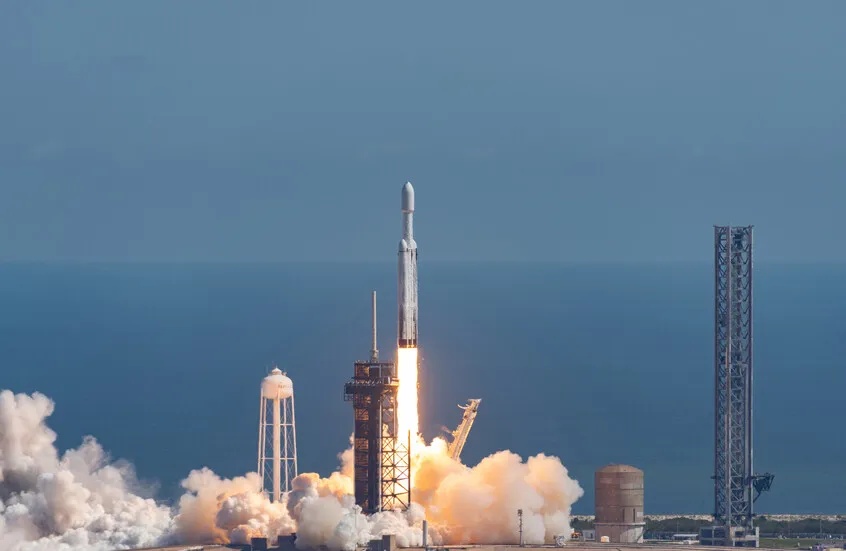
A SpaceX rocket segment collided with the Moon's surface after losing control, leaving behind a fresh crater and a cloud of dust. This incident has reignited concerns regarding the growing issue of space debris. The impact, equivalent to the force of three tons of TNT explosive, occurred at approximately 7:35 AM UK time. The spacecraft, weighing around 4000 kilograms, struck the lunar surface with considerable force. Despite close monitoring by ground-based telescopes, amateur astronomers were unable to observe any flash from the impact from Earth. Telescopes in America continue to monitor for any signs of the explosion, while spacecraft orbiting the Moon are expected to transmit images of the impact site in the coming days. This space object was the upper stage of a Falcon 9 rocket, which had launched in January 2025 carrying a lunar lander. Typically, upper rocket stages either re-enter Earth's atmosphere and burn up or fall into the ocean. However, this particular mission required additional thrust, which resulted in the upper stage remaining adrift in space, unable to return to Earth. SpaceX had not intended for the rocket to strike the Moon. Nevertheless, astronomers discovered earlier this year that its trajectory was heading towards the lunar surface. With its fuel completely depleted, the rocket became incapable of altering its course. Juliana Scheiman, NASA's Dragon science and programs manager at SpaceX, confirmed that a combination of solar activity and gravitational forces had placed the rocket on this particular path. Collisions of space debris with the Moon are considered rare events. Previously, a Chinese rocket stage impacted the Moon in March 2022. NASA also deliberately crashed a rocket stage into the Moon in 2009 to study the plume of ejected lunar material, and in the 1970s, NASA crashed stages from its Saturn V rocket to investigate seismic effects.