Local

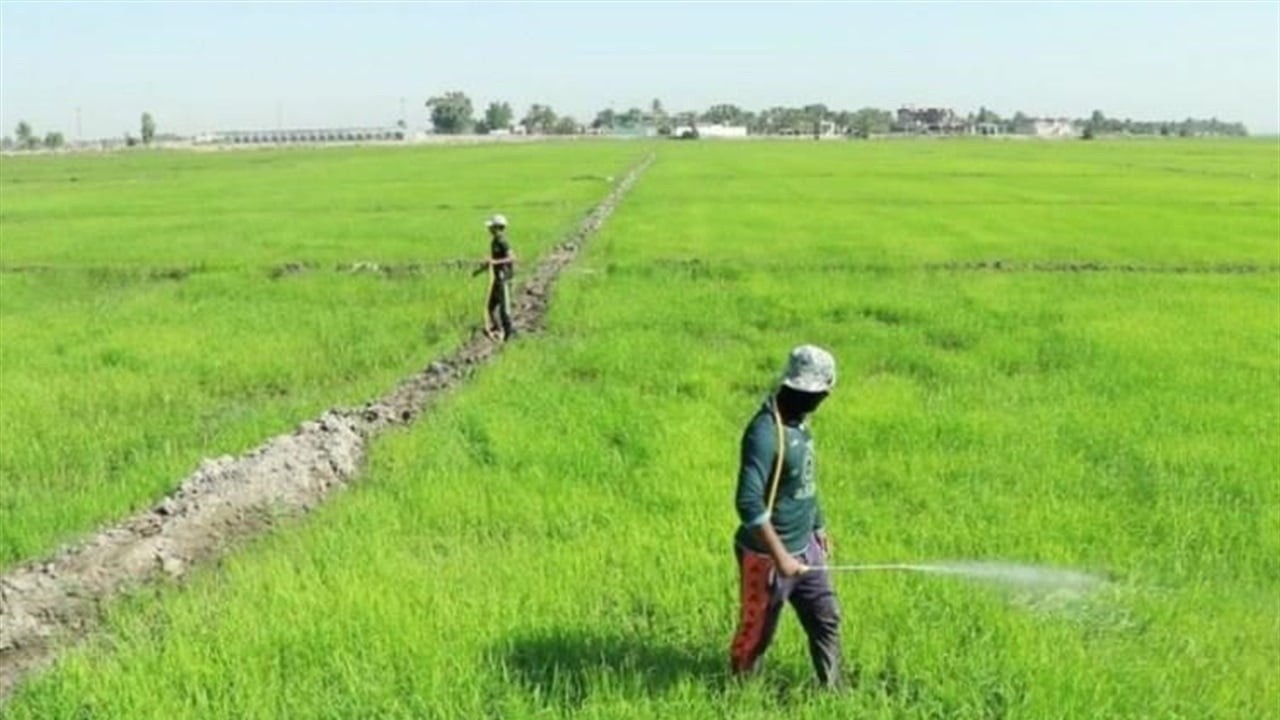
The approval of the winter agricultural plan for the 2026-2027 agricultural season, announced by Agriculture Minister Abdel Rahim Al-Shammari during a press conference on Wednesday, comes under exceptional circumstances facing the country's agricultural sector. The agricultural system is dealing with severe challenges, primarily rapid climate change, water scarcity, and a financial crisis that has delayed payments to farmers for the past two seasons. Addressing these hurdles and revitalizing the agricultural sector have been placed at the top of the ministry's strategic priorities. The Council of Ministers officially approved the new plan with a total area of 7,489,444 dunums, marking a notable increase of nearly 40 percent compared to the previous agricultural season, which was limited to about 4.5 million dunums. Al-Shammari explained that this step is accompanied by a comprehensive package of decisions and instructions directed to agricultural directorates to provide full support to farmers, considering the agricultural sector a fundamental source of income for a wide segment of Iraqi society. He noted that the current plan was designed to be more diversified and encouraging to maximize per-dunum productivity. The total areas of the plan are distributed among 5,334,898 dunums for wheat cultivation, 1,767,440 dunums for barley, and 387,106 dunums allocated for winter vegetables, field crops, legumes, and fodder crops. Regarding irrigation methods and water sources, the plan includes 5,234,944 dunums of irrigated lands using various methods, compared to 2,254,500 dunums of rain-fed lands. Specifically, wheat areas are divided into 2,444,856 dunums under modern irrigation systems, 1,973,024 dunums along rivers and irrigation projects, and 917,018 dunums of rain-fed lands. Regarding price stability and crop marketing, the Minister of Agriculture affirmed that the plan maintains stability in wheat purchase prices, pointing to the cabinet decision to purchase wheat production within an area of up to one thousand dunums at a price of 700,000 dinars per ton, while production exceeding the plan for areas larger than one thousand dunums is priced at 500,000 dinars per ton. He pointed out that about 90 percent of farmers are covered by the higher price, aiming to achieve stability, secure production costs, and rationalize financial support by purchasing at a price higher than the global market rate. Additionally, a decision was obtained allowing the Mesopotamia General Seed Company and the Iraqi Seed Production Company to receive barley crops from farmers without support according to upcoming instructions, while permitting the export of the crop abroad. In the track of logistical support and production requirements, the ministry achieved decisive decisions including supporting the sale of plan seeds to farmers by 70 percent, and supporting pesticides by 100 percent for wheat included in the plan. Regarding fertilizers, customs duties on imported fertilizers, amounting to 35 percent, were raised, and the Ministry of Agriculture was authorized to purchase DAP fertilizer directly from manufacturing plants to reduce prices and production costs. Continuing irrigation mechanization efforts, the supply of pivot irrigation systems to farmers and investment companies with capacities of 60, 80, and 120 dunums continues, with a 30 percent subsidy and a repayment period of up to ten years. Meanwhile, registration procedures were facilitated and restricted to those with a legal relationship to the land, with an emphasis on actual exploitation and holding directorates legally accountable for violations.