Global

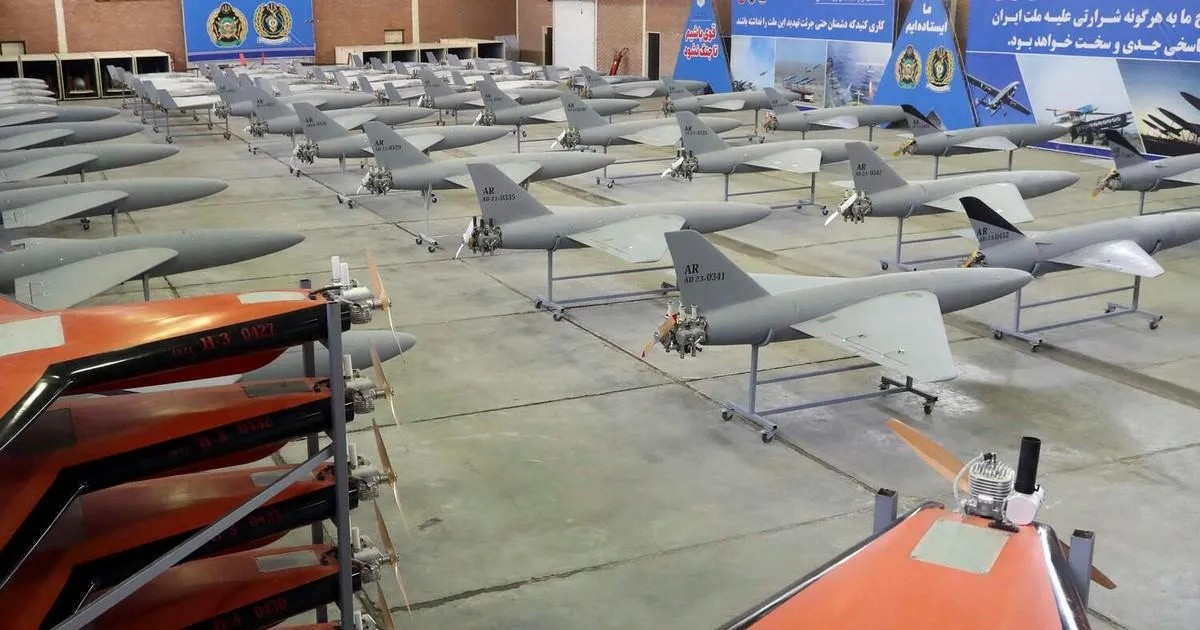
While Beijing publicly lauded peace efforts in the Middle East, recent information has revealed sensitive electronic component shipments from China to Iran. These components are reportedly capable of being used in the manufacturing of drones and missile guidance systems. Last June, coinciding with the temporary truce signed between the United States and Iran—an agreement praised by China for its role in de-escalating regional tensions—an aircraft from China landed in Tehran. Iranian customs data indicated that this aircraft carried a shipment destined for the Iranian Ministry of Defense, comprising precise electronic components used in the production of drone parts and missile guidance systems. Furthermore, customs records show approximately 1,300 shipments of dual-use Chinese components were sent to the Iranian Ministry of Defense this year up to June. These shipments included electronics, engines, GPS equipment, and aircraft parts that can be employed in both unmanned aerial vehicles and missiles. This intelligence suggests an acceleration in the pace of shipments after the United States imposed a blockade on Iranian maritime ports, with the sanctioned Iranian airline Mahan Air sharply increasing its cargo flights from China. Support was not limited to electronic components, as Chinese companies also supplied chemical materials utilized in the production of ballistic missiles. In this context, American officials have imposed sanctions on Chinese and Hong Kong entities accused of assisting Iran in acquiring weapons and military technologies. On the military front, US officials indicated that satellite images, obtained from Chinese sources, were linked to an Iranian attack that resulted in the deaths of three American soldiers. Additionally, according to documents and informed sources, Chinese companies contributed to providing the raw chemical materials used in the manufacture of the types of ballistic missiles deployed in the aforementioned attack. These activities reveal a level of Chinese support for Iran that was not previously disclosed, nor publicly acknowledged by the administration of former US President Donald Trump. For its part, Beijing reaffirmed its consistent adherence to international rules and expressed its rejection of "attempts to defame its reputation by linking it to the conflict." It also emphasized its ongoing cooperation with Iran and its support for all efforts aimed at achieving peace in the Middle East region. In a related context, China had previously stressed that it enforces strict controls on the export of dual-use components that can be employed for both civilian and military purposes. It declared its rejection of unilateral US sanctions, including those penalizing unauthorized trade in dual-use materials, considering such sanctions a violation of international law. It is worth noting that China remains the sole major buyer of Iranian oil, despite US sanctions designed to halt these flows, providing billions of dollars to Tehran this year. According to US officials and individuals familiar with money movements, Chinese front companies assisted in laundering these funds, while Chinese banks processed transactions through the Chinese financial system and in Chinese currency to circumvent US oversight.