Global

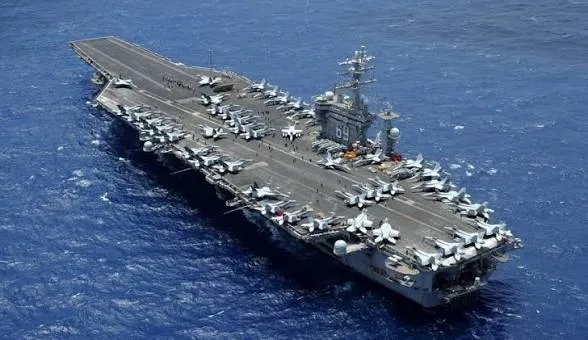
Reports indicate that several U.S. aircraft carriers are currently undergoing extended maintenance periods in shipyards, which will keep them out of combat readiness for several years. This development comes as the U.S. Navy operates a fleet comprising only 11 aircraft carriers. From this fleet, four carriers have been deployed to the Middle East to participate in ongoing combat operations there. The remaining carriers are suffering from technical malfunctions or are undergoing extensive maintenance work, thus rendering them out of operational service for periods that could extend for many years. This situation has compelled the Pentagon to redistribute its naval fleet across multiple fronts, particularly in the context of continuous operations against Iran. For instance, the aircraft carrier "George Washington," previously stationed in Japan, was moved to the Middle East to replace the "Abraham Lincoln," leaving the Western Pacific without any American aircraft carrier presence. Technical issues did not cease there, as the U.S. Navy encountered a series of recurring malfunctions affecting the performance of its naval assets during its military campaign. Among the most prominent of these was the newest aircraft carrier, the "Gerald Ford," which returned last May after an 11-month deployment showing significant wear and tear in its main components. This necessitated its entry into drydock for a maintenance operation that is expected to take at least a full year. Furthermore, the vessel faced other daily challenges; in March, a large fire broke out in its laundry room, with firefighting efforts lasting over 30 continuous hours, resulting in the complete destruction of all crew accommodations. In the preceding February, the sewage system on board the carrier also malfunctioned, adding to the crew's distress and impacting its operational readiness.