Local

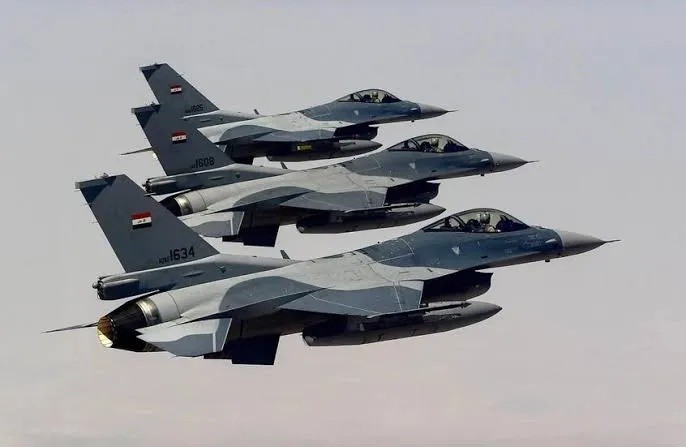
The Commander of the Iraqi Air Force, Lieutenant General Pilot Khaled Al-Tamimi, affirmed that all air missions carried out by the force within Iraqi territory are conducted with complete independence from international coalition forces. In recent statements, Al-Tamimi emphasized the Air Force's ongoing efforts to develop its capabilities and build its system, noting that the maintenance of F-16 aircraft is performed 100 percent by Iraqi technical staff. The origins of the Iraqi Air Force date back to its establishment on April 22, 1931. Its armament has seen historical developments linked to the country's political relations. After 2003, its activities were temporarily suspended before a comprehensive rebuilding and modernization process began, including the reopening of vital airbases such as Shahid Muhammad Alaa Air Base, previously known as Al-Muthanna Air Base. Since then, Iraq has begun contracting for modern and advanced aircraft, including F-16 jets from the United States, along with T-50 and L-159 aircraft, in addition to Russian Sukhoi jets. During the war against the ISIS terrorist organization, the Air Force experienced significant growth, and new airbases were opened, enhancing its ability to monitor Iraqi airspace and territory through advanced reconnaissance aircraft. During that period, the Air Force conducted 58,822 missions, ranging from transport and reconnaissance to other operations, destroying massive ISIS targets and providing vital support to ground forces. Al-Tamimi clarified that the Iraqi Air Forces include the Air Force, Air Defense, and Army Aviation, with these three branches operating in high coordination. In the context of asserting operational independence, the Air Force Commander affirmed that there is no direct support from international coalition forces in current operations. He pointed to Iraq's possession of advanced aircraft such as F-16s, T-50s, and L-159s (a ground attack aircraft), in addition to armed Cessna reconnaissance planes and fully national drones, which have replaced coalition aircraft without any coalition experts present. He explained that the difference between coalition forces and companies providing technical services is that the latter operate for a fee, a common practice globally, stressing that Iraq seeks to build an integrated system of workshops, factories, and depots. He unequivocally confirmed that no coalition force has carried out any mission within Iraqi territory since early 2016. Regarding airspace coverage, Al-Tamimi stated that there is an air defense system that provides full radar coverage for all Iraqi territory, noting that multi-role F-16 aircraft can fly for both air defense and ground attack purposes. He affirmed that F-16 jets have carried out missions for more than 10 consecutive days and continued to do so without any external interference, except from the Commander-in-Chief's office, and solely by Iraqi pilots. He denied rumors about American maintenance for the aircraft, emphasizing that all maintenance work for F-16s is performed by 100 percent Iraqi personnel. He explained that engineers who joined service in 2004 have now reached the rank of brigadier general after training abroad. While a certain level of engine repair is done by Pratt & Whitney, a significant portion of engine repairs is conducted internally. The national vision for the Air Force stems from the national security strategy, aiming to continue building and developing its capabilities to occupy a distinguished position in the region. This vision includes a full daily aerial survey of all of Iraq, where the country is divided into sectors, with each aircraft surveying a specific area and submitting its reports to the Commander-in-Chief's office via the Army Chief of Staff. Regarding minor airspace violations, he explained that they are possible but controlled, and any notification regarding them is handled swiftly. Despite the continued presence of some dormant terrorist cells in remote and rugged areas, the threat of terrorism is currently very limited thanks to citizen vigilance and available capabilities. The Air Force Commander revealed ongoing negotiations with other countries to acquire advanced aircraft like the French Rafale jets, noting that pilot training for this type could take up to five years, and that there is a calculated plan for acquiring aircraft rather than merely stockpiling them. Regarding drones, he mentioned attempts at local manufacturing and an idea to establish a command for this weapon, which is still in its early stages, clarifying that advanced drones are distributed among weapon commands and their information is compiled at the Commander-in-Chief's office through the targeting cell. Al-Tamimi affirmed that there is no need for coordination with neighboring countries for internal missions, with the exception of C-130 transport duties, which require diplomatic correspondence through the Ministry of Foreign Affairs. In the context of international cooperation, he pointed to a highly advanced aerial exercise conducted at Balad Air Base on April 22, 2025, with the participation of countries such as France, Italy, the United States, and Jordan. He noted that an exercise planned for France this year was postponed due to regional circumstances, and Iraqi F-16s are expected to cross eight countries to participate in it later. He also mentioned that Rafale jets stationed in Jordan participate in monthly exercises with Iraqi forces. Regarding the Rafale negotiations, he clarified that they are advanced and that this aircraft is highly sophisticated, with the first batch under negotiation comprising 14 aircraft, which are very expensive compared to F-16s and are more modern and advanced. The Air Forces comprise the Air Force, Air Defense, and Army Aviation, with Air Defense responsible for detecting hostile targets. Strict regulations define a 10-nautical-mile zone before the border of a neighboring state and 10 miles from the Iraqi side. Upon crossing, the aircraft is considered to have entered Iraqi territory, at which point interrogation and a first warning are issued by Air Defense, with the actual response carried out by Air Force jets. Armed air-to-air aircraft are ready for takeoff daily, and pilots are prepared at any moment. In a related context, he disclosed that a missile struck an Antonov transport plane at an airbase in Baghdad, causing it to burn and go out of service, as the cost of repair exceeded its purchase price, leading to the decision to permanently decommission it. He stressed that the loss of the aircraft is significant and not easily compensated. Lieutenant General Al-Tamimi concluded his statements by emphasizing the necessity of keeping pace with continuous developments in military aviation through participation in international conferences and sending pilots for advanced training courses. He noted that Iraq possesses a fully integrated Air Force College, in addition to specialized F-16 instructors, ensuring the continuous building of national capabilities and competencies.