Eco

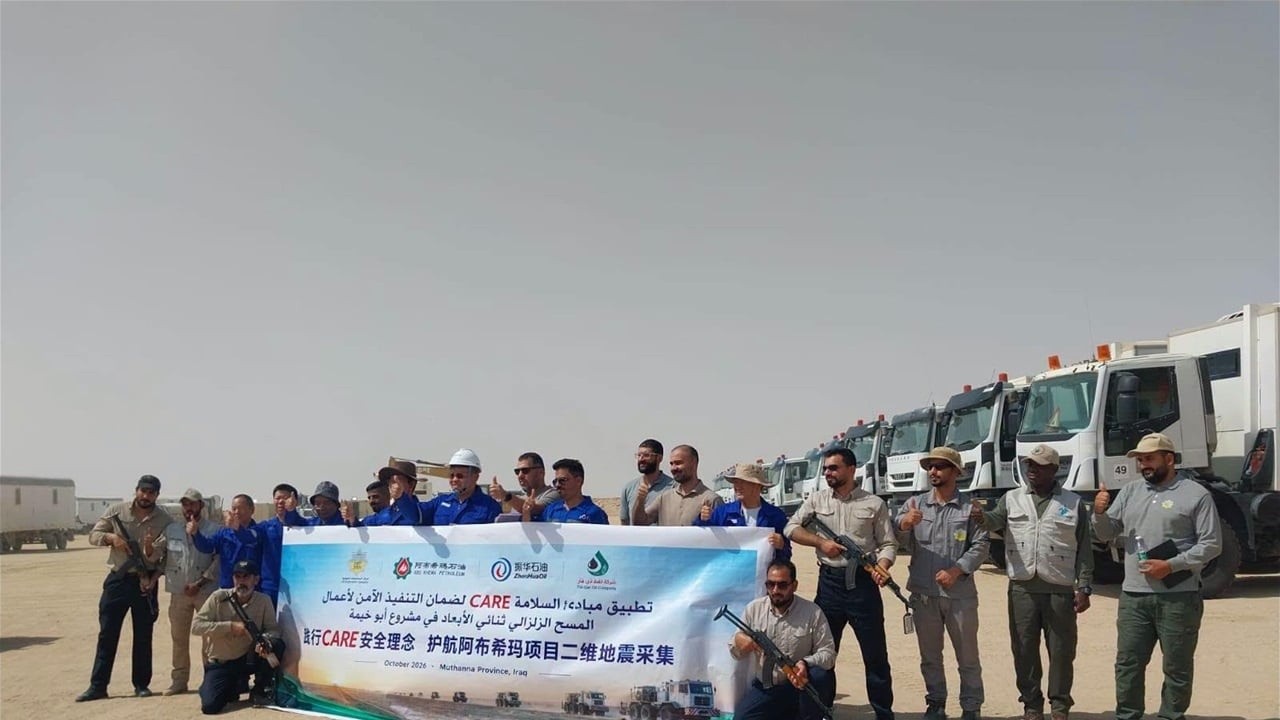
Field operations and exploration surveys are actively progressing in the Abu Khaima oil field in southern Iraq's Muthanna Governorate, located adjacent to the shared borders with Saudi Arabia and Kuwait. This significant technical initiative lays the groundwork for critical future decisions regarding the development, appraisal, and commercial exploitation of the field's hydrocarbon resources. Specialized technical teams are currently conducting comprehensive two-dimensional seismic surveys spanning an area of roughly 407 square kilometers, aiming to establish an accurate geological and geophysical database that will support subsequent reservoir evaluations and provide detailed insights into this promising border area. These field operations are being carried out by the Oil Exploration Company through its Sixth Seismic Crew, operating in direct coordination with the Chinese field operator, Abu Khaima Petroleum Company, as part of Iraq's fifth supplementary and sixth petroleum licensing rounds. In line with the Iraqi Ministry of Oil's policy to empower national expertise and involve domestic institutions in specialized technical activities, personnel from the Dhi Qar Oil Company—specifically through the Muthanna Oil Department and the field division—are managing direct on-site supervision and monitoring. This coordinated oversight ensures operational compliance with technical standards while optimizing Iraqi engineering capabilities across the upstream sector. The ongoing 2D seismic exploration relies on capturing and analyzing acoustic waves reflected from subsurface rock formations deep underground, which allows geophysicists to construct detailed mapping models of hidden geological structures and identify prospective reservoir zones. Although concluding these seismic surveys does not automatically confirm commercially viable petroleum reserves on its own, it serves as an indispensable prerequisite for all subsequent technical and engineering assessments. The acquired data will guide future drilling campaigns, determine exploratory priorities, and mitigate technical risks associated with long-term upstream development programs. From a historical perspective, the initial exploration of the Abu Khaima oil field dates back to 1975, when an initial exploration well was drilled reaching the Najmah geological formation. The field covers a vast overall area of approximately 1,809 square kilometers and currently contains only a single drilled well. The asset witnessed notable competitive interest from international energy firms, including Chinese companies ZhenHua and Geo-Jade, before ZhenHua secured the investment contract approximately a year and a half ago, reflecting Iraq's broader strategy to partner with foreign firms to develop national energy assets. These technical efforts align with Iraq's ambitious strategy to systematically expand crude oil production capacities, targeting an intermediate output level of 7 million barrels per day by 2027, followed by a long-term goal of reaching between 8 and 10 million barrels per day by 2030. Nevertheless, realizing these production targets involves navigating several operational challenges, notably adherence to production quotas established within the OPEC framework, as well as the necessity of modernizing domestic energy infrastructure. Expanding export channels beyond traditional Gulf routes remains crucial, including strategic pipeline connections toward the Turkish port of Ceyhan, the Syrian port of Baniyas, and the Jordanian port of Aqaba. Ultimately, the findings of the seismic survey at Abu Khaima will offer decision-makers a comprehensive assessment of the field's commercial feasibility. This progress complements nationwide initiatives to capture associated gas, upgrade existing transportation infrastructure, and foster productive partnerships with international energy companies to maximize the recovery and economic efficiency of Iraqi national resources.